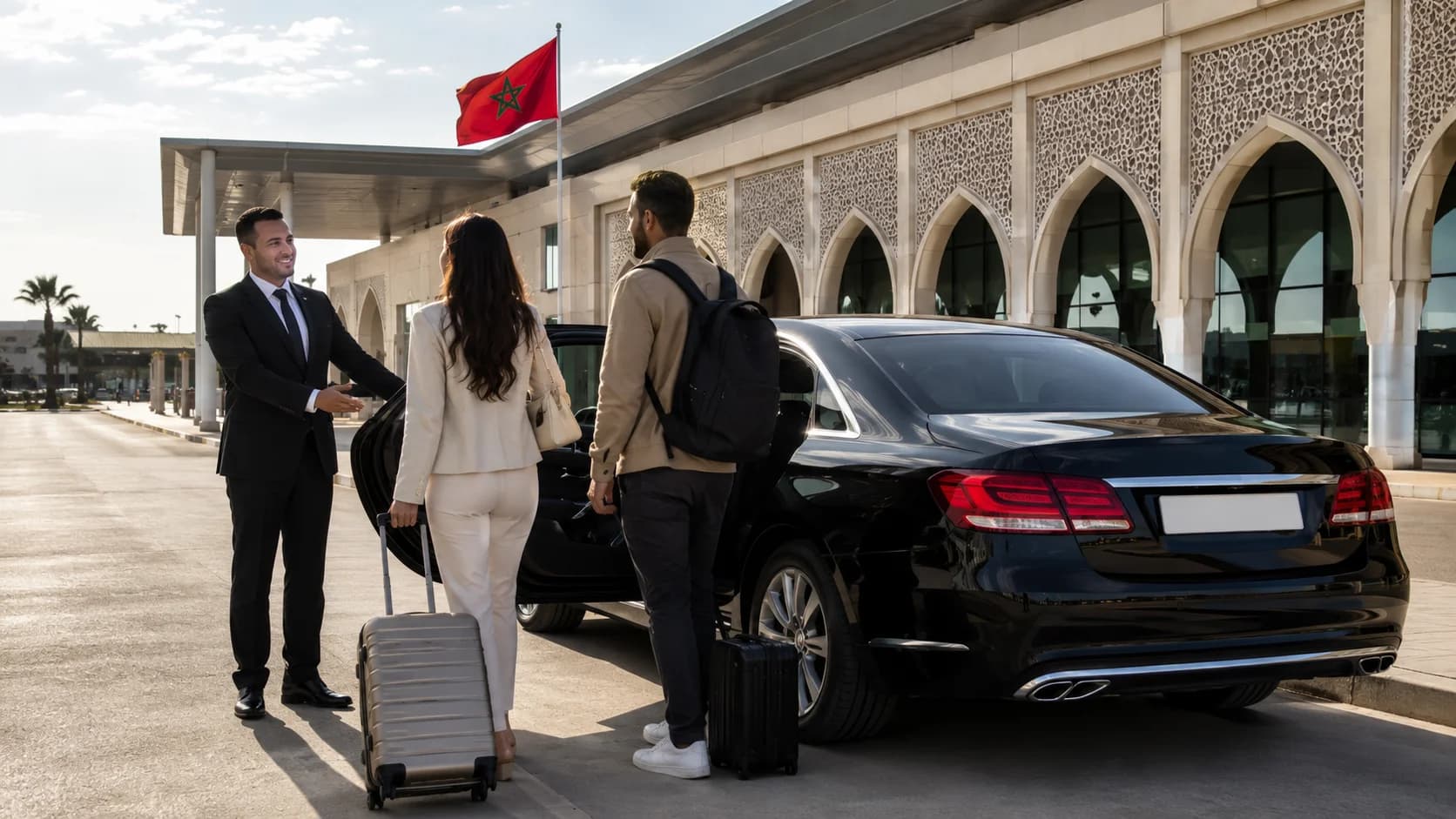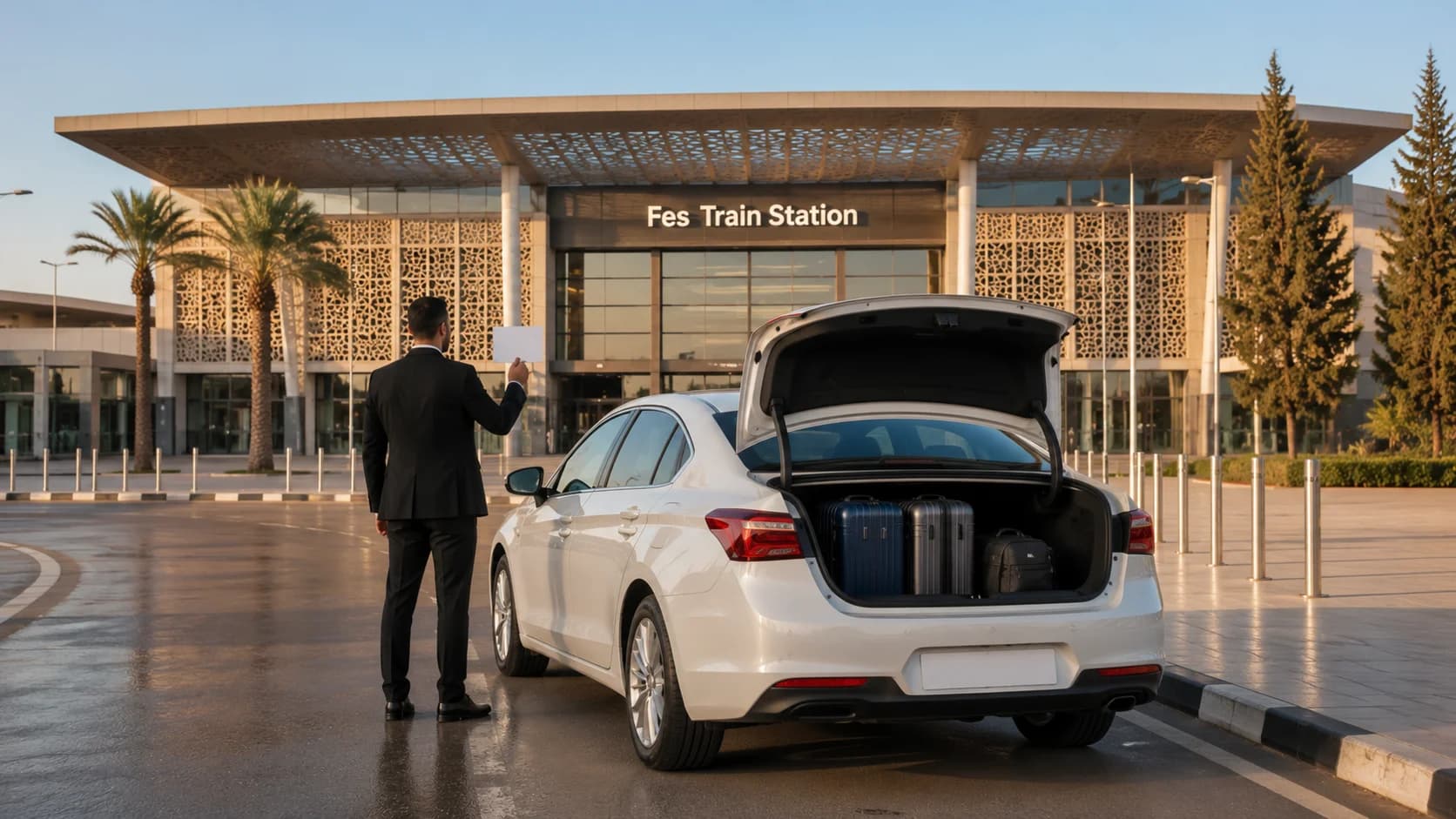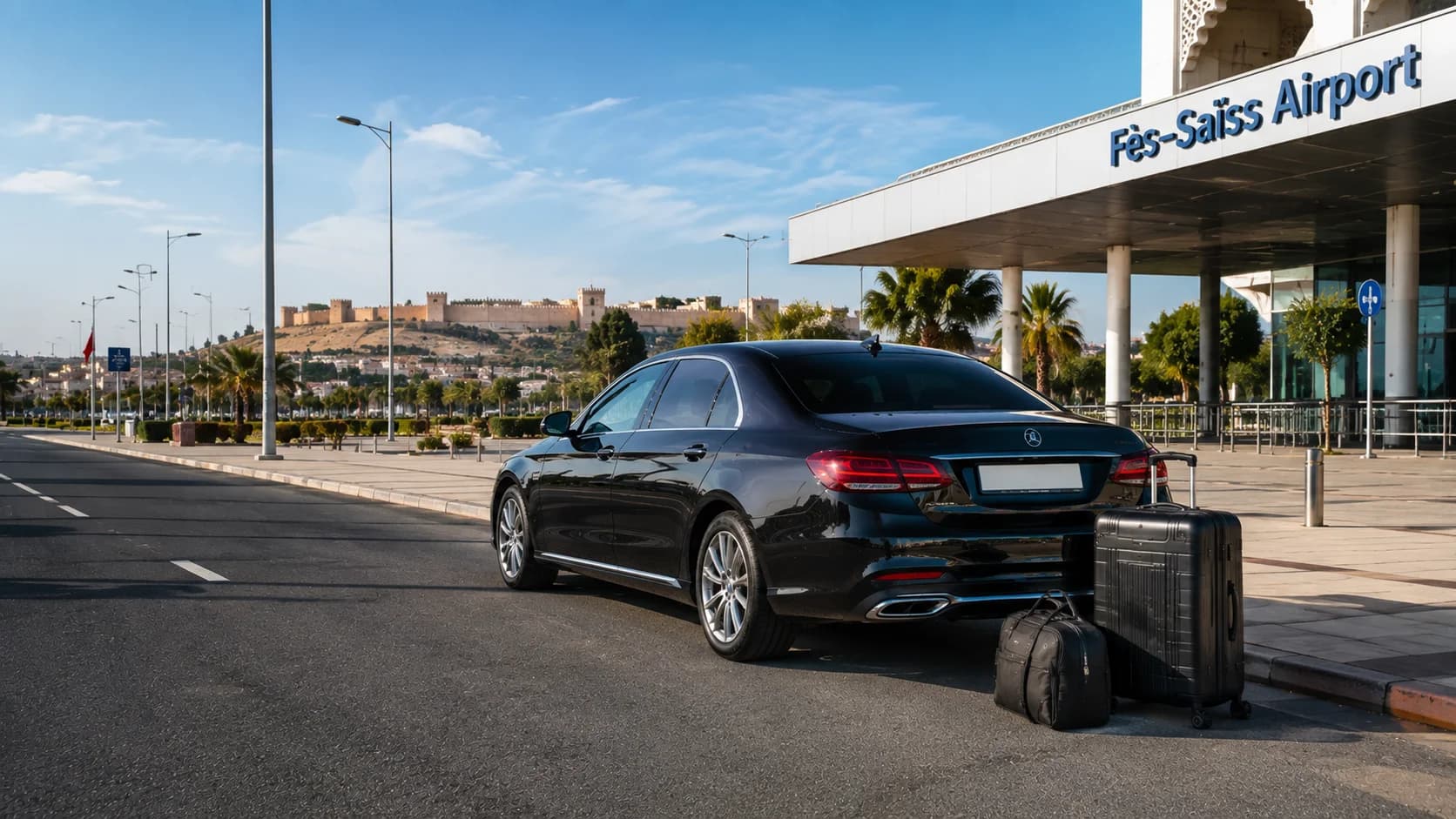









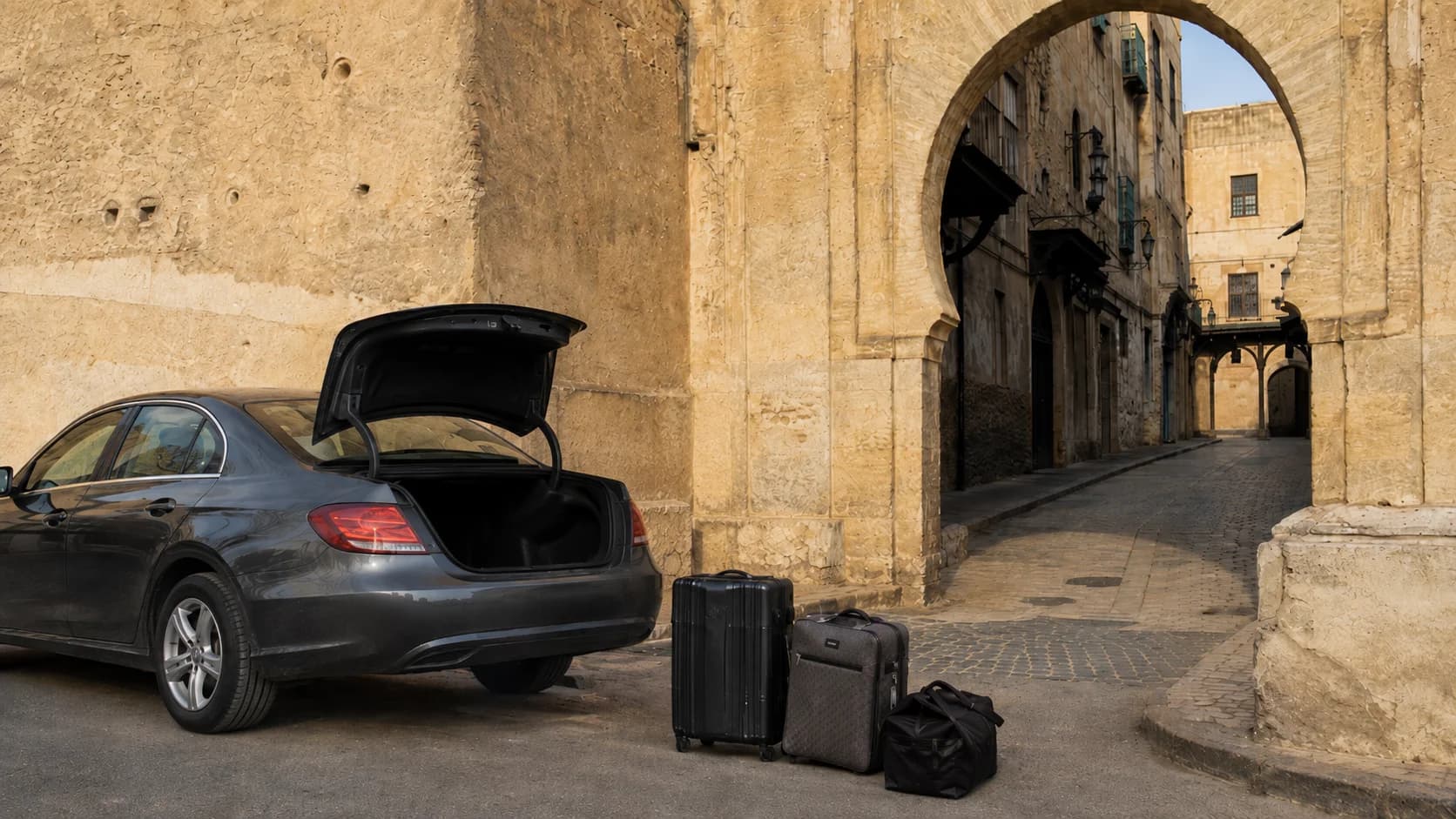
Staying inside Fes el-Bali is one of the most memorable ways to experience Morocco, but arriving at a traditional riad is different from checking into a modern hotel with a driveway outside the entrance.
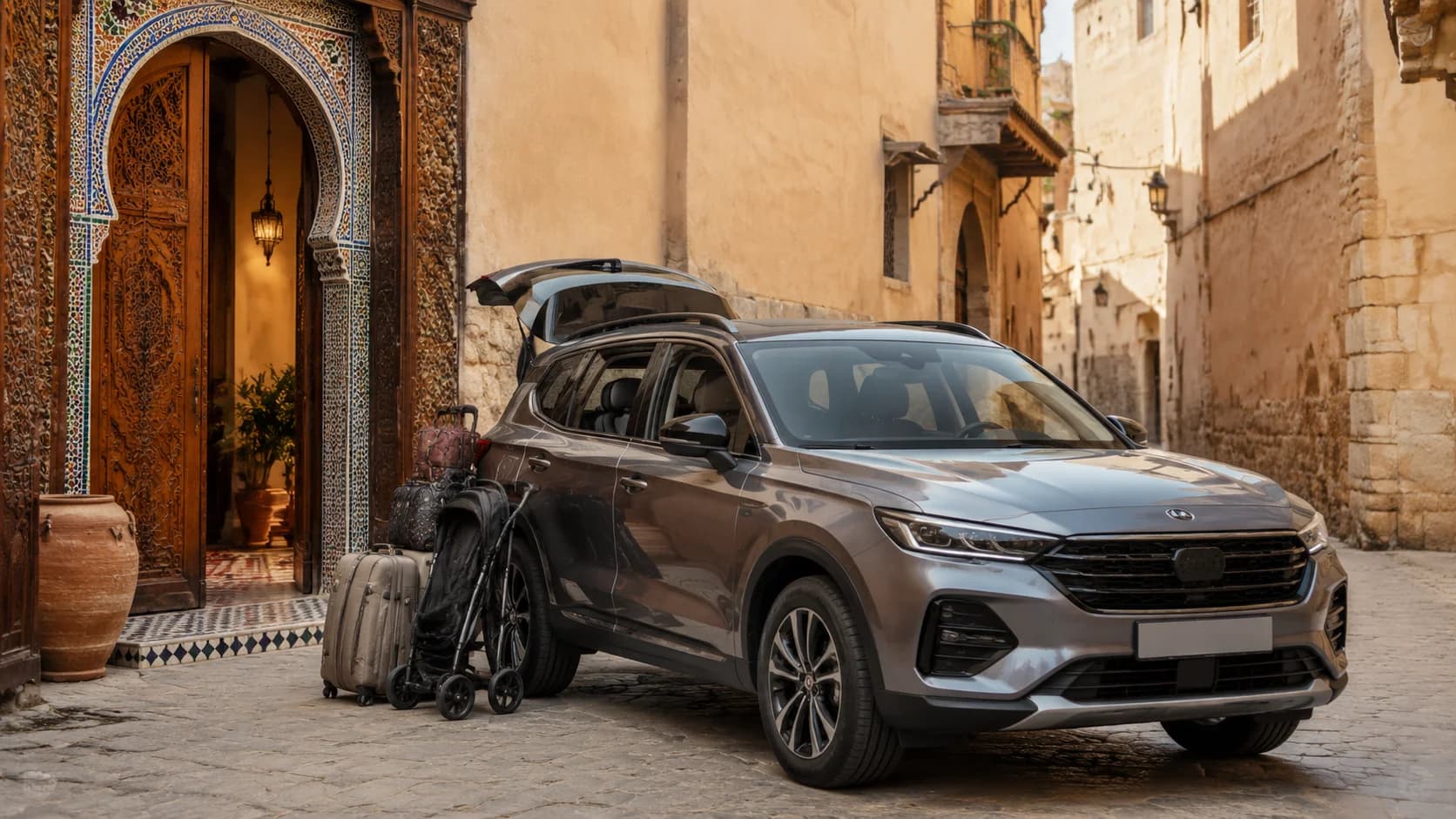
A Fes medina luggage transfer normally involves two stages: first, your driver takes you and your luggage as close as practical to the agreed vehicle-access point around the medina; second, the final journey to the riad is completed on foot, sometimes with help from riad staff or a porter arranged in advance.
That distinction matters because much of Fes el-Bali is made up of narrow pedestrian lanes where normal cars cannot reach individual properties. Moroccan tourism authorities describe Fez's historic medina as part of Morocco's car-free medina tradition, while UNESCO recognizes the exceptional historic urban fabric of the Medina of Fez.
If you are arriving with heavy suitcases, children, elderly relatives or several pieces of luggage, the best approach is simple: confirm the nearest accessible meeting point with your riad before travelling and make sure everyone understands who will handle the luggage after the vehicle stops.
Table of Contents
- Why the driver may not reach your riad
- Fes el-Bali and the car-free medina reality
- Common perimeter gates and meeting areas
- What happens when the vehicle reaches the gate
- Coordinating porters or riad staff
- Luggage size, stairs and walking distance
- Airport arrivals vs intercity arrivals
- Medina-arrival checklist
- Frequently asked questions
Why the Driver May Not Reach Your Riad
A private transfer driver can normally take you to the closest suitable vehicle-access point agreed with your accommodation, but a riad deep inside Fes el-Bali may not be directly accessible by car.
The final part of the trip may therefore look like this:
Airport, train station or another city → private vehicle → medina perimeter → luggage handoff → walk to riad.
This does not mean the transfer has stopped at the wrong location. It is simply how accommodation access works in many parts of the historic medina.
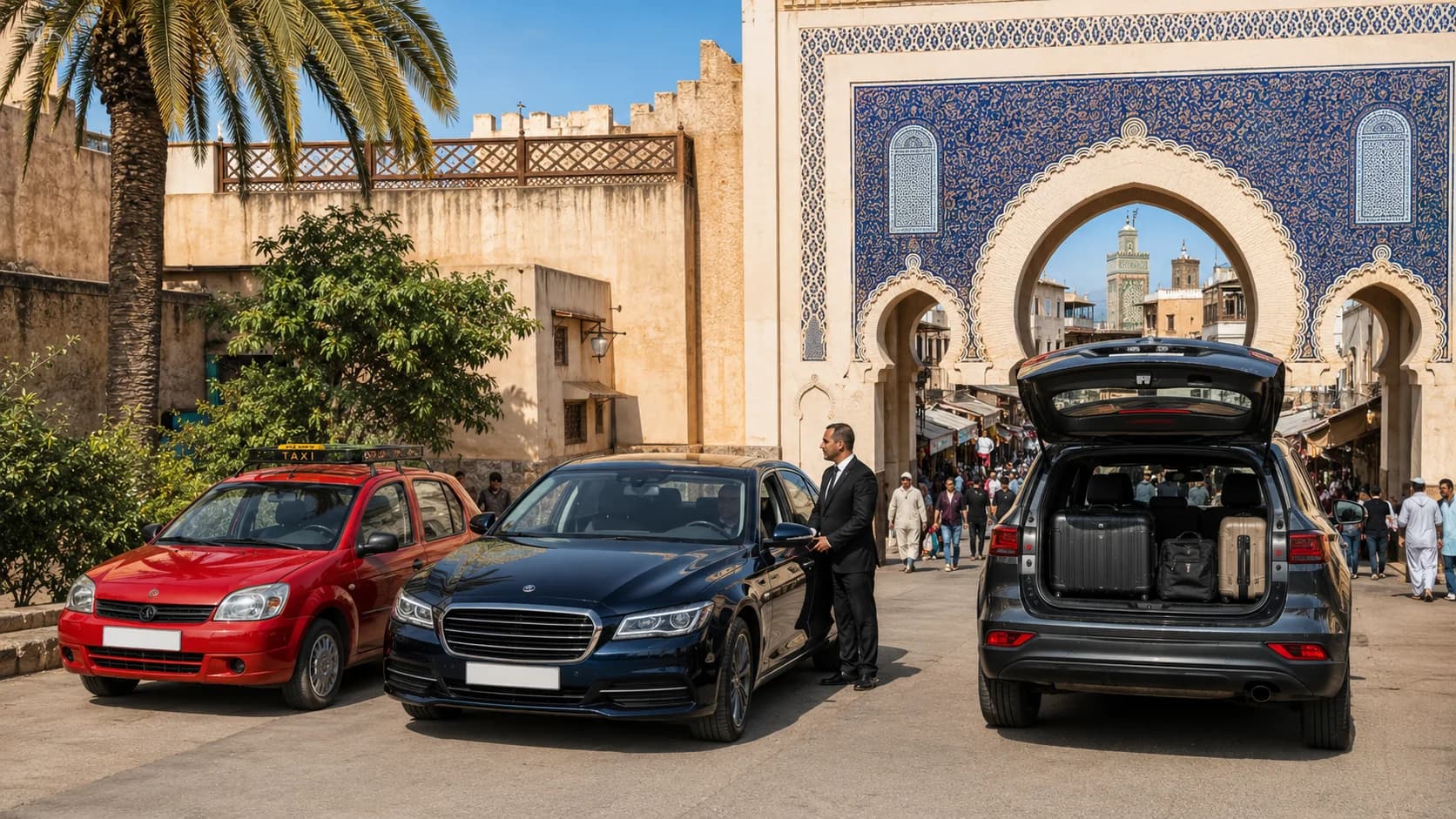
Bab Boujloud is one of the best-known entrances to Fes el-Bali and is described by Morocco's National Tourist Office as an easy entrance to the medina. However, it is not automatically the correct drop-off point for every riad.
Your actual meeting point depends on where the accommodation is located.
For that reason, the most useful information you can send your driver is not simply the riad name. It is the vehicle-access point recommended by the riad itself.
Fes el-Bali and the Car-Free Medina Reality
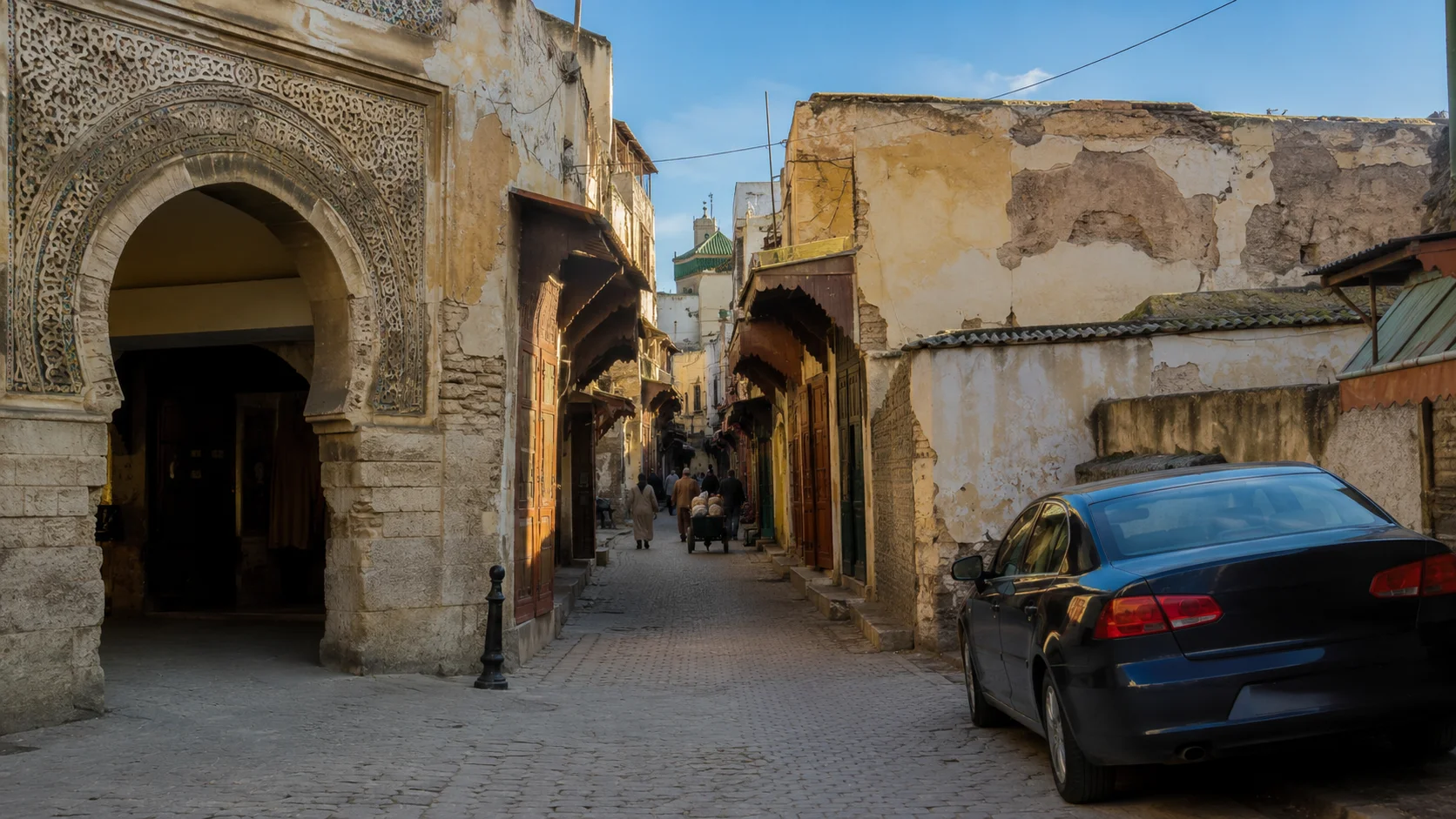
Fes el-Bali was built centuries before modern road transport. Its dense historic layout includes narrow streets, passages, steps, commercial lanes and residential alleys.
UNESCO describes the Medina of Fez as one of the most extensive and best-preserved historic towns of the Arab-Muslim world, with an urban fabric that has remained remarkably intact.
That historic character is part of what makes staying there special, but it also means that vehicle access is fundamentally different from the modern areas of Fes.
In many sections, you should not expect:
-
a taxi to stop directly outside your riad;
-
a minivan to enter the same alley as pedestrians;
-
door-to-door vehicle access similar to a conventional hotel;
-
the driver to continue carrying luggage deep into the medina unless that service has specifically been arranged.
The better expectation is vehicle-to-gate or vehicle-to-access-point service, followed by a coordinated final handoff.
This is particularly important when booking a Fes airport transfer. The road portion may be completely straightforward, but the last few hundred metres can require additional planning depending on the accommodation.
Common Perimeter Gates and Meeting Areas
There is no single universal "Fes Medina drop-off point."
Different riads may use different entrances or vehicle-access areas according to their location inside Fes el-Bali.
Bab Boujloud
Bab Boujloud, often called the Blue Gate, is one of the most recognizable entrances to the old medina. Morocco's National Tourist Office identifies it as a particularly easy way to enter Fes el-Bali.
Accommodation near the western side of the medina may use an access area around Bab Boujloud or another nearby point.
However, choosing Bab Boujloud simply because it is famous can create an unnecessary walk if your riad is on the other side of the medina.
Bab Rcif and Place Rcif
The Rcif side of Fes el-Bali can be more convenient for accommodation located toward the southeastern or central sections of the old city.
Some riads may therefore instruct guests to meet around Bab Rcif, Place Rcif or another nearby vehicle-access point.
Always follow the accommodation's exact instructions rather than assuming one gate fits every property.
Bab Ftouh
Bab Ftouh is another possible access area for accommodation situated closer to the eastern or southeastern side of the medina.
Again, its relevance depends on the exact riad.
The Most Important Rule
Ask your accommodation:
"What is the nearest point that a private transfer vehicle can reach?"
That question is often more useful than asking, "Which medina gate are you near?"
A riad may have its own preferred pickup point, nearby landmark, parking area or meeting location that makes the luggage handoff easier.
What Happens When the Vehicle Reaches the Gate?
A well-planned Fes riad luggage transfer should have a clear transition between the road journey and the pedestrian portion.
A typical arrival works like this.
1. The driver approaches the agreed access point
Your driver follows the road network to the medina perimeter or the closest practical vehicle-access location.
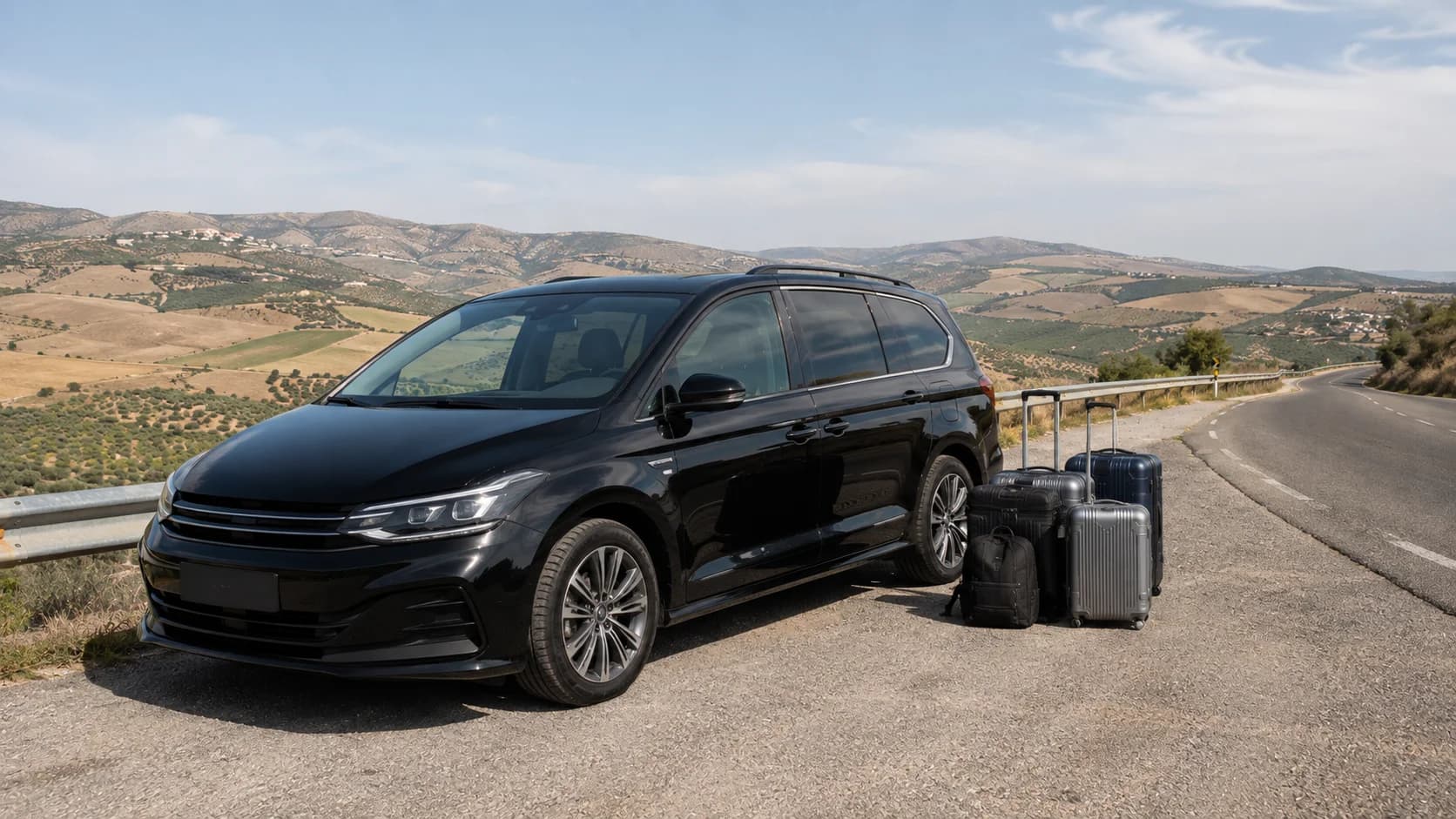
If you are travelling with several passengers or substantial luggage, booking a larger vehicle such as a minivan transfer in Fes can make the road portion more comfortable.
2. The vehicle stops at the agreed location
This may be beside a gate, square, parking area or another landmark specified by the accommodation.
Traffic conditions, local restrictions and temporary road access can affect the exact stopping position, so a few metres of variation is normal.
3. The luggage is unloaded
The driver unloads the luggage from the vehicle.
This is the key transition point.
The private transfer has covered the road-access portion of the journey. The remaining question is who will take the bags from that point to the riad.
4. Riad staff or an arranged porter may take over
If your accommodation has arranged someone to meet you, that person may guide you through the medina and assist with the luggage.
Some properties can coordinate luggage help themselves.
Other travellers may use a local porter.
However, porter service should never be assumed to be automatically included with the vehicle transfer unless you have been specifically told that it has been arranged.
5. You walk the final section to the accommodation
The distance may be short or considerably longer depending on the riad.
This is why knowing the correct arrival point matters so much.
A well-chosen gate can make the final walk easy. A poorly chosen gate can turn a simple arrival into an unnecessary trek through unfamiliar lanes with suitcases.
Driver Responsibility vs Riad or Porter Responsibility
This distinction helps avoid one of the most common misunderstandings when arriving in Fes Medina.
The driver's role
A private transfer driver is primarily responsible for the road journey.
This generally includes:
-
meeting you at the agreed pickup location;
-
transporting you safely to Fes;
-
carrying your luggage inside the vehicle;
-
reaching the agreed vehicle-access point;
-
unloading the luggage.
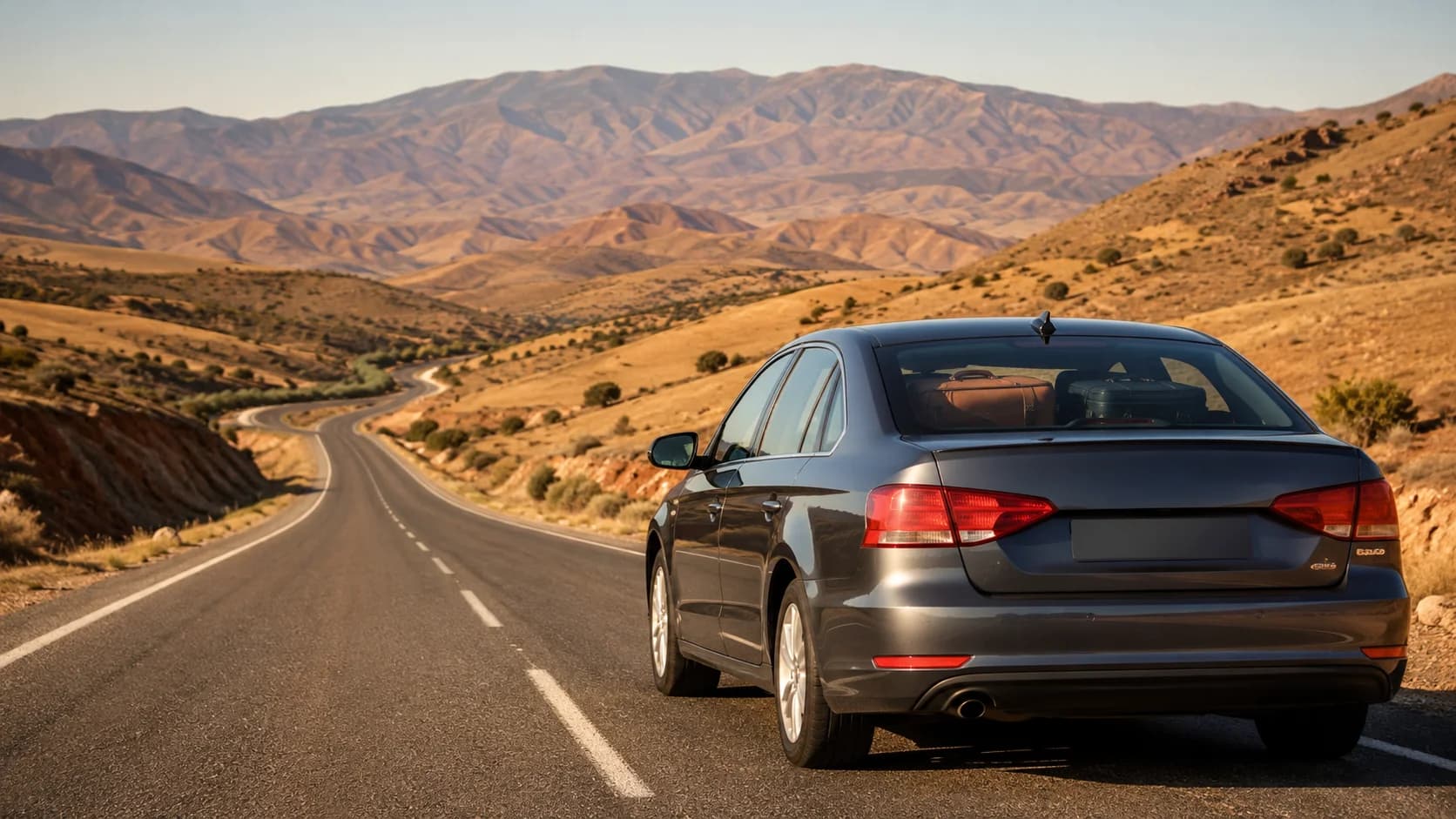
For travellers who prefer a comfortable private vehicle for the road portion, a sedan transfer in Fes can work well for individuals, couples and passengers with moderate luggage.
The riad's role
Your accommodation understands its local pedestrian access better than anyone else.
It can normally tell you:
-
which gate or meeting point to use;
-
how far the walk is;
-
whether there are stairs;
-
whether staff can meet you;
-
whether luggage assistance can be arranged;
-
which landmark is easiest for the driver to find.
The porter's role
Where available and arranged, a porter can help move luggage between the vehicle-access point and accommodation.
That may be particularly useful if you have:
-
large suitcases;
-
several bags;
-
mobility limitations;
-
young children;
-
elderly travellers;
-
equipment that is difficult to carry.
Do not treat porter assistance as guaranteed. Confirm availability, arrangements and any applicable charge before arrival.
Coordinating Porters or Riad Staff
The easiest arrival is usually the one coordinated before the vehicle reaches Fes.
Contact your riad and send a simple message:
"We are arriving by private transfer. Which vehicle-access point should our driver use, and can someone meet us there with the luggage?"
Then send the response to your transfer provider.
This creates a clear chain of communication:
Guest → riad → driver → agreed meeting point.
If the accommodation provides a Google Maps pin, written directions or the name of a gate, send the information exactly as provided.
If possible, also give the riad your approximate arrival time.
That becomes especially useful after an airport pickup, because flight arrival, baggage collection and road traffic can affect when you reach the medina.
Luggage Size, Stairs and Walking Distance
Luggage planning matters more in Fes el-Bali than it does at a conventional hotel.
A rolling suitcase is convenient on smooth airport floors but may be less comfortable on historic paving, slopes or steps.
Before travelling, consider four things.
Number of bags
Two travellers with one suitcase each will usually have an easier final walk than a group with eight large bags.
For groups, coordinate luggage assistance in advance.
Bag weight
A short walk can feel much longer when pulling a very heavy suitcase.
If your bags are difficult for you to carry independently, ask your riad about assistance before arrival.
Steps and uneven surfaces
Historic medina accommodation can involve steps both outside and inside the building.
Travellers with reduced mobility should ask specific questions rather than relying solely on the walking distance shown on a map.
Children and strollers
Families may need to manage luggage, children and a stroller at the same time.
In this situation, reducing the number of loose bags and arranging someone to meet you at the access point can make arrival significantly easier.
Airport Arrivals vs Intercity Arrivals
The final medina handoff is similar regardless of where your road journey begins, but the earlier stages differ.
Arriving From Fes Saïss Airport
With a Fes airport transfer, your driver can collect you after the airport arrival process and take you toward your agreed Fes el-Bali access point.
The important distinction is that "airport to riad transfer" does not necessarily mean the vehicle can physically stop at the riad's front door.
For a property inside a pedestrian lane, the road journey finishes at the nearest practical access point.
The final pedestrian section then begins.
Arriving From Another Moroccan City
If you are arriving by private transfer from Casablanca, Rabat, Marrakech, Chefchaouen, Meknes or another destination, the same principle applies.
The driver handles the intercity road journey.
Once you reach Fes, the vehicle proceeds to the medina access point confirmed with your accommodation.
For longer journeys, choosing the right vehicle matters as well. Couples may prefer a private sedan transfer in Fes, while larger families or groups with extra luggage may be more comfortable with a Fes minivan transfer.
Medina Arrival Checklist
Before leaving for Fes, check the following:
-
Confirm your exact riad name and address.
-
Ask the riad for its preferred vehicle-access point.
-
Send that location to your transfer provider.
-
Ask how long the walk is from the drop-off point.
-
Ask whether stairs or steep passages are involved.
-
Confirm whether riad staff will meet you.
-
If you need a porter, confirm whether one can be arranged.
-
Do not assume porter assistance is included in the transfer price.
-
Tell the transfer company if you have unusually large or numerous bags.
-
Keep the riad's WhatsApp or phone contact available when approaching Fes.
A few minutes of coordination before arrival can prevent considerable confusion at the medina perimeter.
Frequently Asked Questions
Can a taxi drive to my riad in Fes Medina?
Not necessarily. Large parts of Fes el-Bali are pedestrian and inaccessible to normal vehicles. Your driver will normally go to the nearest practical vehicle-access point associated with your accommodation rather than directly to a riad located deep inside the medina.
Where does a private transfer stop for Fes el-Bali?
The stopping point depends on your riad's location and current vehicle access. Possible areas can include approaches around Bab Boujloud, Rcif or Bab Ftouh, but there is no universal drop-off point for every accommodation. Ask the riad for its preferred access location.
What happens to my luggage at the medina gate?
The driver unloads your luggage from the vehicle. From there, you may carry it to the riad yourself or hand it to riad staff or a porter if assistance has been arranged.
Should I contact my riad before arrival?
Yes. This is one of the most useful steps you can take. Ask for the correct vehicle-access point and whether someone can meet you there.
Can a porter meet us at the gate?
Often this can be possible, either through the accommodation or locally, but it should not be treated as guaranteed. Ask your riad whether luggage assistance can be arranged and confirm the details before arrival.
Which Fes medina gate will I use?
It depends on your accommodation. Bab Boujloud is one of the best-known entrances and Morocco's National Tourist Office describes it as an easy entrance to the medina, but another gate or access point may be substantially closer to your riad.
What if I have heavy suitcases?
Tell both your riad and transfer provider before travelling. Ask the riad whether staff or porter assistance can be arranged at the vehicle-access point and avoid assuming that the driver can carry luggage deep inside pedestrian streets.
Does the same process apply after an airport transfer?
Yes. An airport transfer covers the road journey from Fes Saïss Airport toward the medina, but if your riad is in a pedestrian-only area, the final section will still require a handoff at the closest suitable vehicle-access point.
Plan the Final 500 Metres as Carefully as the First 15 Kilometres
A smooth arrival in Fes is not only about choosing a reliable driver. It is about understanding where the driver's road access ends and where the medina portion of the journey begins.
Before travelling, confirm your riad's nearest vehicle-access point, ask whether someone can meet you there and arrange luggage assistance if you need it.
MarHire Taxi Fes can handle the road transfer to the agreed perimeter access point, while your accommodation remains the best source for confirming the final pedestrian route to its door.
For airport arrivals, see our Fes airport transfer options. Travellers looking for a comfortable private vehicle can also compare our sedan transfers in Fes, while families and larger groups can choose a minivan transfer in Fes.