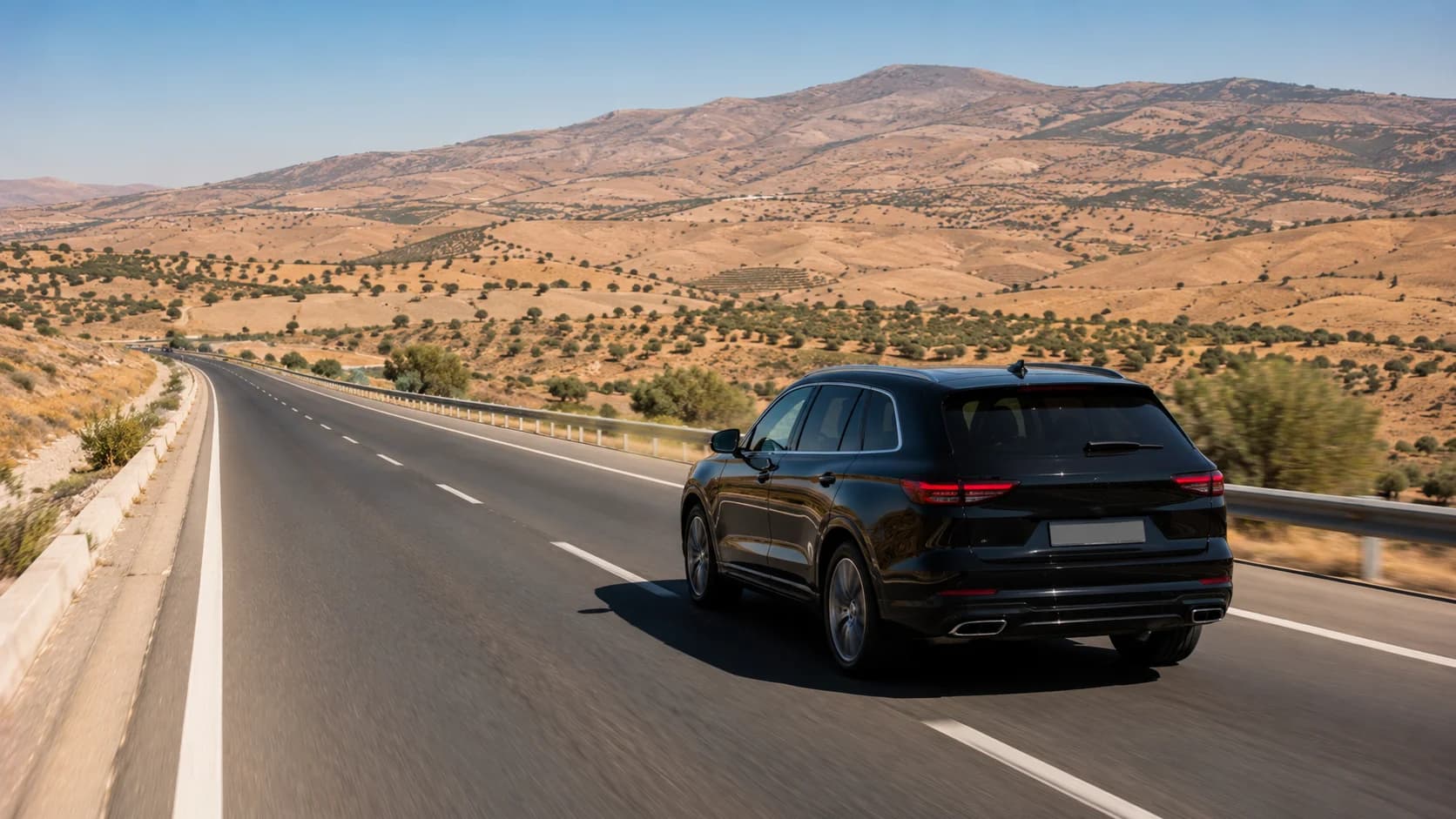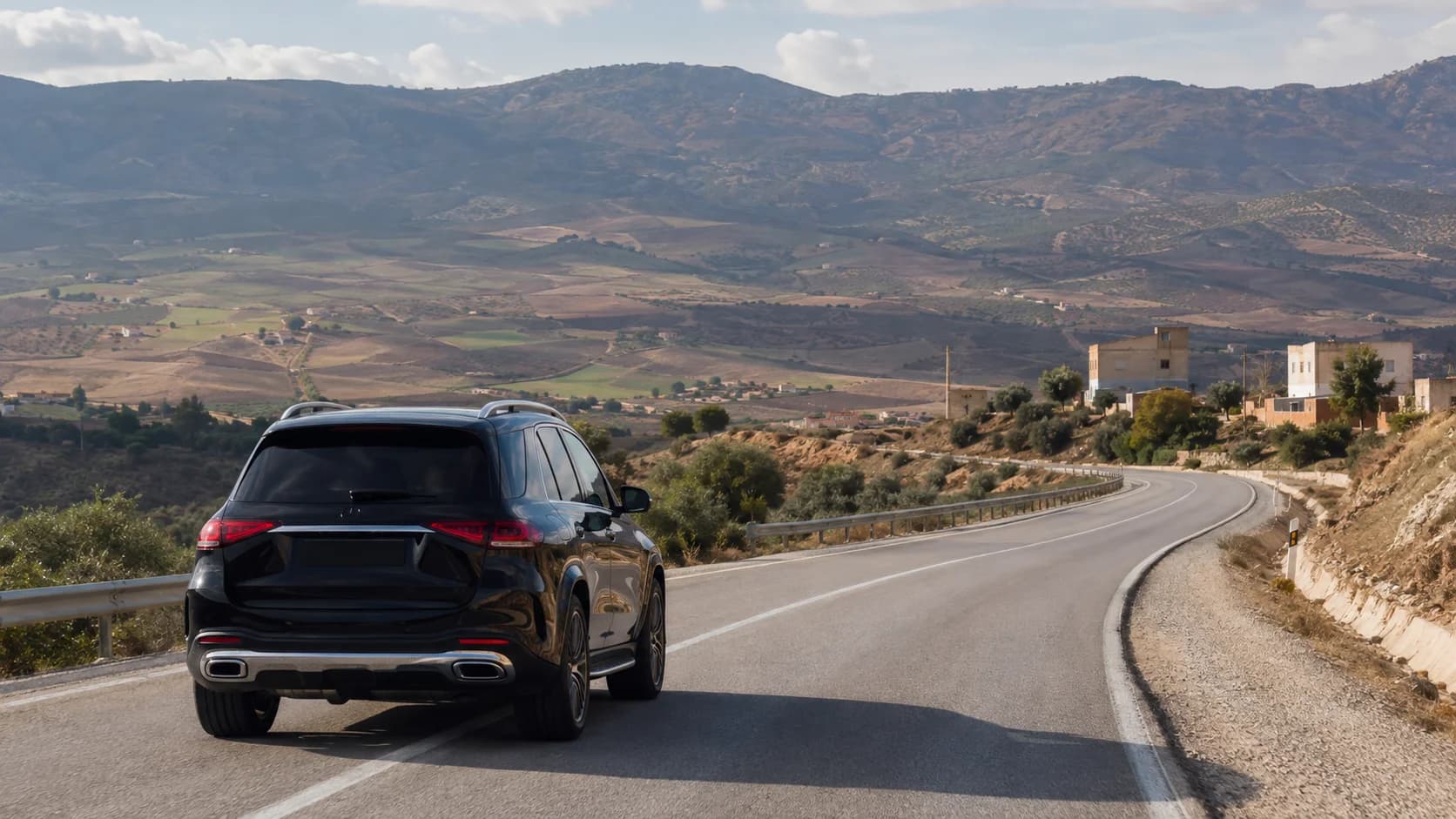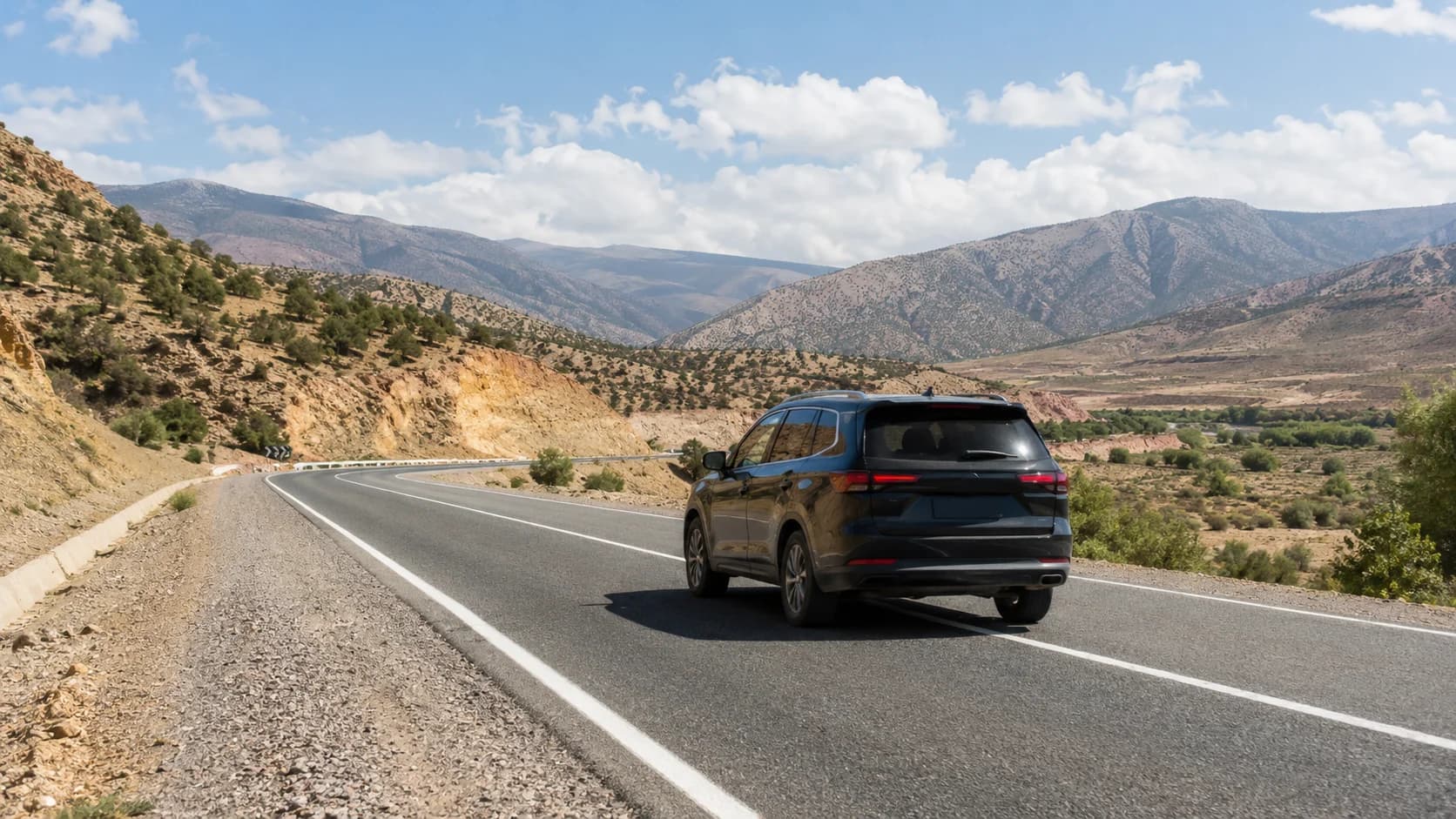








Fes to Merzouga is one of Morocco’s classic Sahara transfer routes, taking travelers from the imperial city of Fes to the dunes of Erg Chebbi near Merzouga. It is a long intercity journey, usually planned as a private door-to-door transfer rather than a simple city taxi ride. The route follows the Middle Atlas direction, passes Ifrane, Azrou, Midelt, Errachidia, the Ziz Valley, Erfoud and Rissani before reaching the desert edge. Driving distance is commonly listed around 457 to 470 km, with a direct drive of just over 7 hours before comfort stops, lunch and photo breaks.
Table of Contents
-
Getting to Merzouga
-
How far is Merzouga from Fes?
-
The N13 route via Midelt and the Ziz Valley
-
Realistic drive time and photo stops
-
SUV, 4x4 or minivan for the desert road
-
One-way vs return transfer
-
Cedar forest and Barbary apes en route
-
Luggage and comfort on a long drive
-
Cost and fixed-rate booking
-
Final Sahara-transfer tips
-
FAQs
Getting to Merzouga
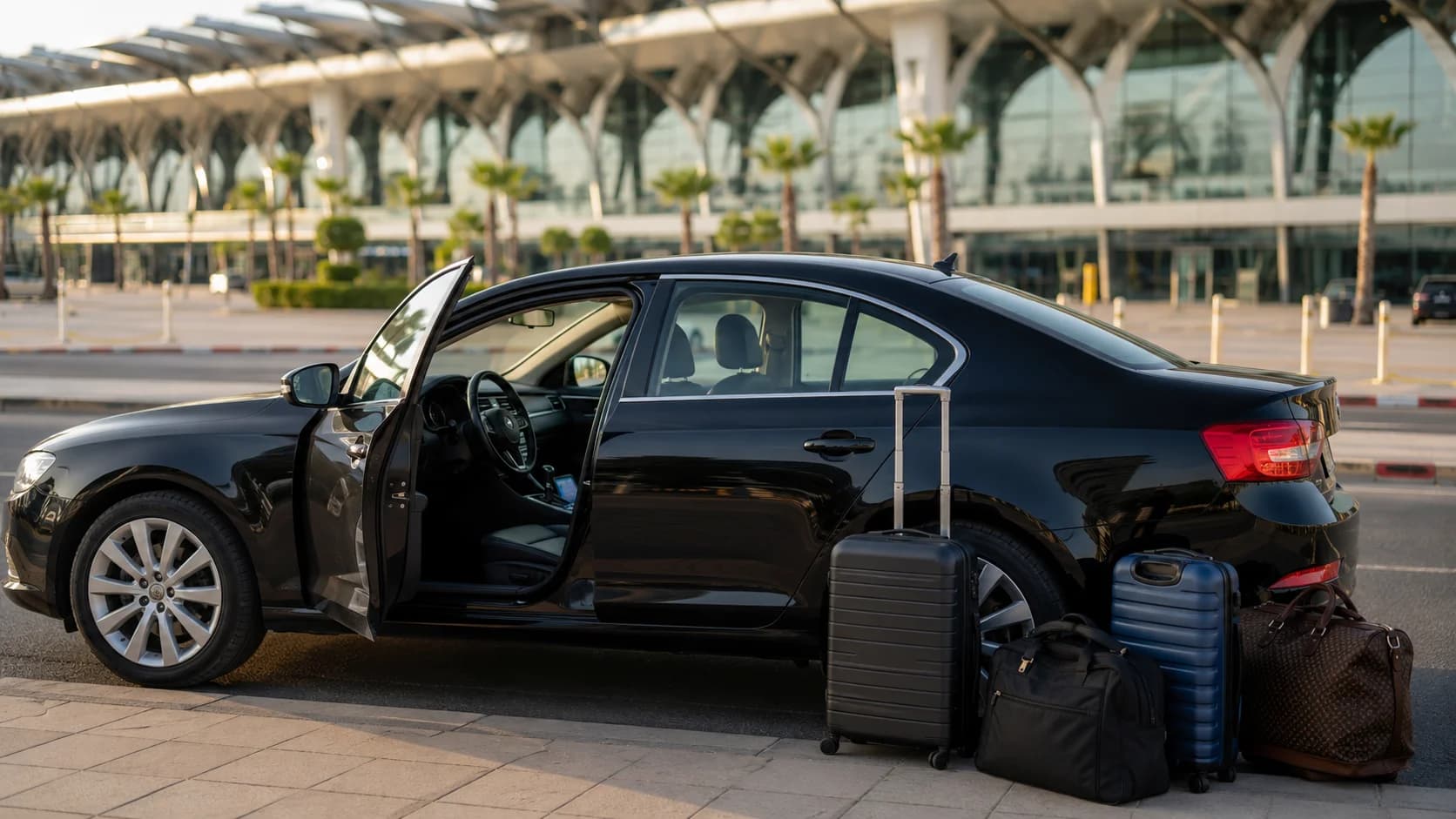
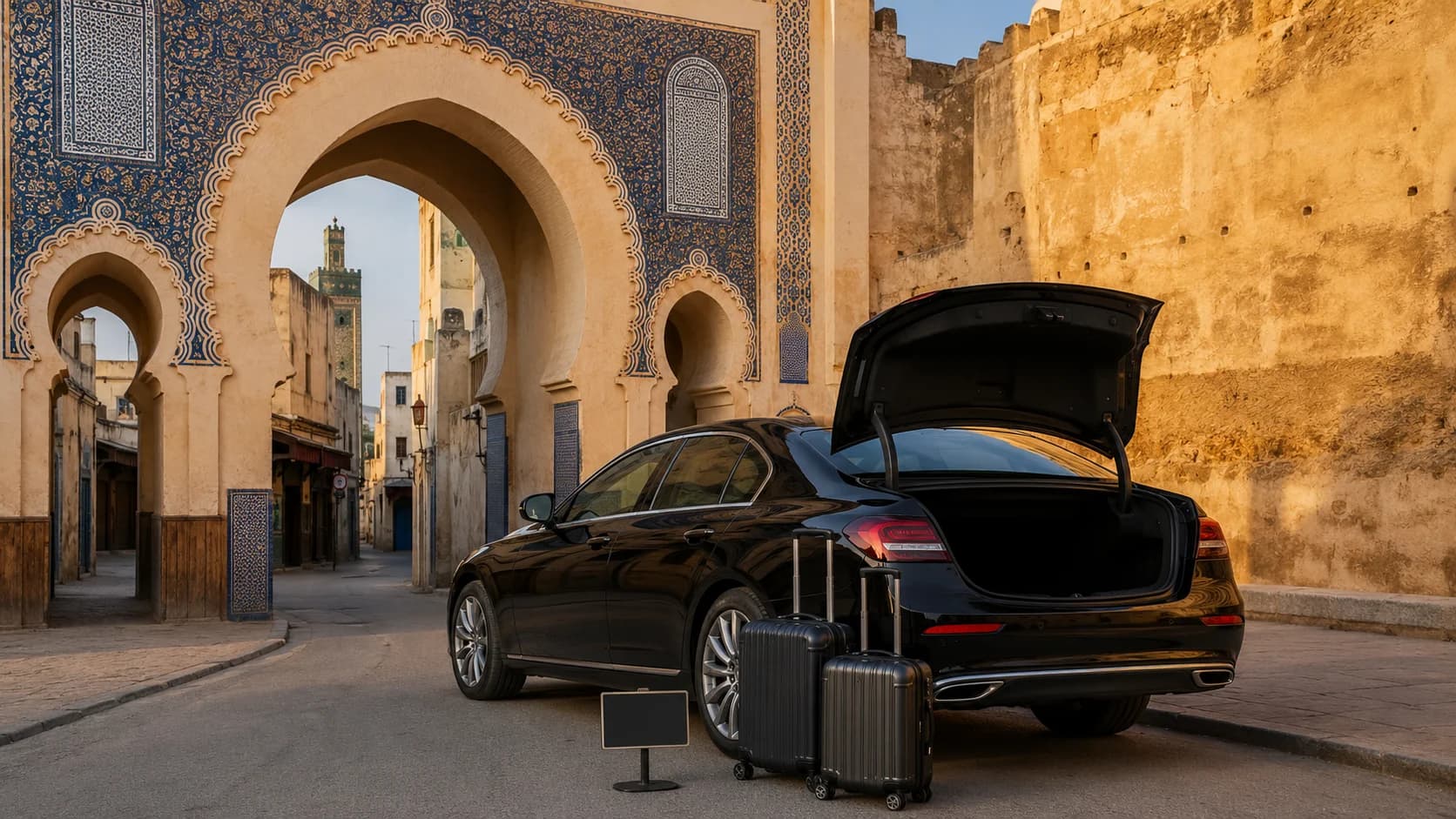
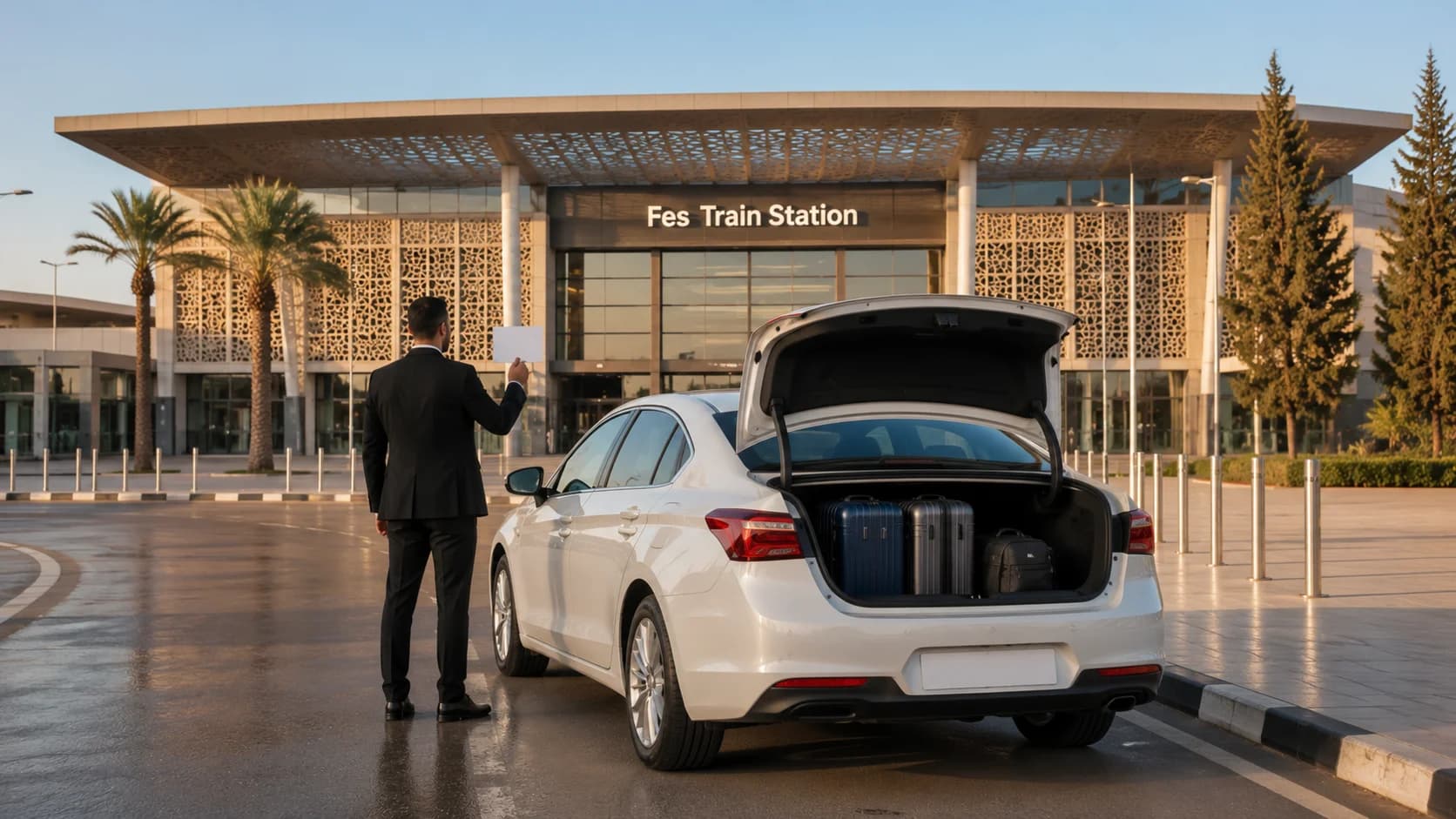
The easiest way to get from Fes to Merzouga is by private transfer with a local driver. The journey is long, scenic and very different from a short airport transfer, so comfort matters. A private driver can collect you from your riad, hotel, Fes-Saïss Airport or a meeting point near the medina, then take you directly to your Merzouga riad, desert camp meeting point or hotel near Erg Chebbi.
For most travelers, this route is best treated as a full travel day. A direct transfer can take around 7 to 8 hours of driving, but a realistic door-to-door day with breaks is closer to 8.5 to 10 hours. That includes coffee stops, lunch, viewpoints in the Ziz Valley and possible short stops near Ifrane or the cedar forest.
If you want a simple transfer with a clear price, start with an intercity travel Fes option. If you are carrying luggage, traveling with family or planning winter travel across the Middle Atlas, ask for the right vehicle before confirming.
How far is Merzouga from Fes?
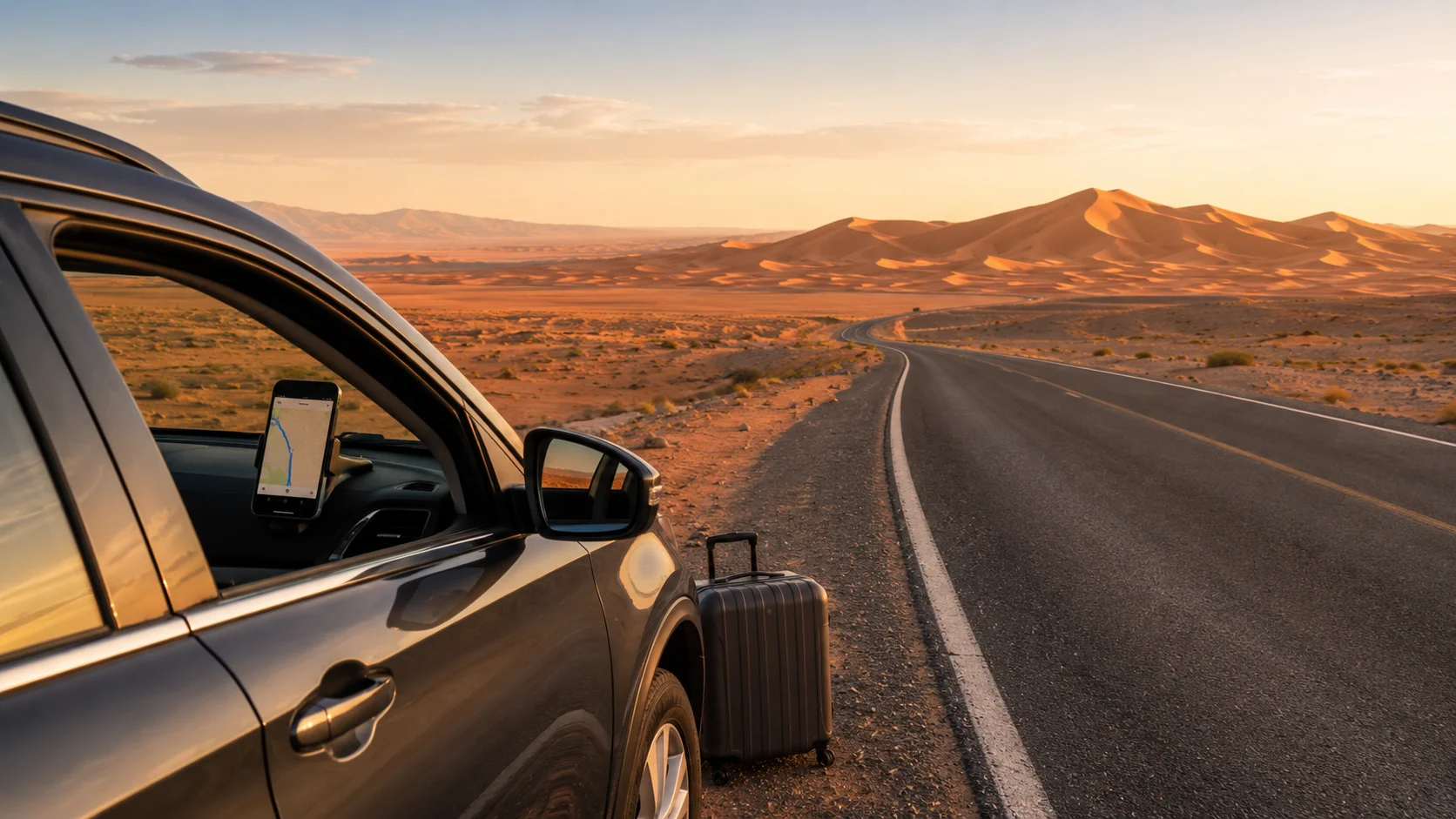
Merzouga is roughly 457 to 470 km from Fes by road, depending on the exact pickup point in Fes and the final drop-off point in Merzouga. Rome2Rio lists the driving distance at about 457 to 458 km, while other travel route references commonly round the journey to about 470 km.
The distance alone does not explain the journey. This is not a flat motorway transfer. The drive crosses changing landscapes: city roads around Fes, mountain roads around the Middle Atlas, high plains near Midelt, the Ziz Valley corridor, then desert roads toward Erfoud, Rissani and Merzouga.
That is why a private transfer is often more comfortable than trying to arrange separate transport stages. You do not need to manage luggage between stations, wait for connections or negotiate a long-distance taxi on arrival. Your driver follows the full route and adjusts the pace around your pickup time, rest stops and final arrival plan.
The N13 route via Midelt and the Ziz Valley
The classic Fes to Sahara desert transfer usually leaves Fes toward Ifrane and Azrou, then joins the southbound N13 corridor through Midelt, Errachidia, Erfoud and Rissani before reaching Merzouga. The N13 is a major national road corridor connected with Azrou in the north and Taouz near Merzouga in the south.
This route is popular because it gives a gradual transition from northern Morocco to the desert. You start with cooler mountain air near Ifrane and Azrou, continue toward Midelt between the Middle Atlas and High Atlas zones, then drop toward the palm valleys and desert towns of southeast Morocco.
The Ziz Valley is one of the most memorable parts of the journey. Morocco’s official tourism website describes the wider Tafilalet oasis area as green valleys crossed by the Ziz and Ghéris wadis, spreading around the Erfoud and Rissani region. For travelers, this means palm groves, valley viewpoints, dry mountains and sudden green strips that make the route feel much more dramatic than a normal transfer.
A good private driver does not turn this into a guided tour unless you request it. The main goal stays simple: door-to-door transport from Fes to Merzouga. But the route naturally gives you chances to pause, stretch and take photos without losing control of the schedule.
Realistic drive time and photo stops
For planning, use three time estimates:
Direct driving time: around 7 to 8 hours.
Comfortable transfer time: around 8.5 to 10 hours.
Very relaxed scenic day: 10+ hours if you add long lunch, many viewpoints or extra stops.
The best schedule is usually an early morning pickup from Fes. Leaving around 7:00 or 8:00 gives more daylight, more flexibility and a calmer arrival in Merzouga before evening plans. This is especially useful if your desert camp has a meeting time for luggage transfer, camel departure or 4x4 access to camp.
Common stop ideas include Ifrane for a short break, the cedar forest area near Azrou, Midelt for lunch, the Ziz Valley viewpoint, Erfoud for a quick stop, and Rissani if time allows. You do not need to stop everywhere. For a smooth transfer, choose two or three useful breaks instead of trying to turn the day into a full sightseeing itinerary.
The best photo stop is usually the Ziz Valley viewpoint because it gives the strongest visual change on the route. The cedar forest can also be interesting, but it should stay a short stop unless you are intentionally building a slower travel day.
SUV, 4x4 or minivan for the desert road
The best vehicle depends on group size, comfort expectations and final drop-off point. The paved road to Merzouga is usually manageable in a normal private transfer vehicle, but the long distance makes space and comfort important.
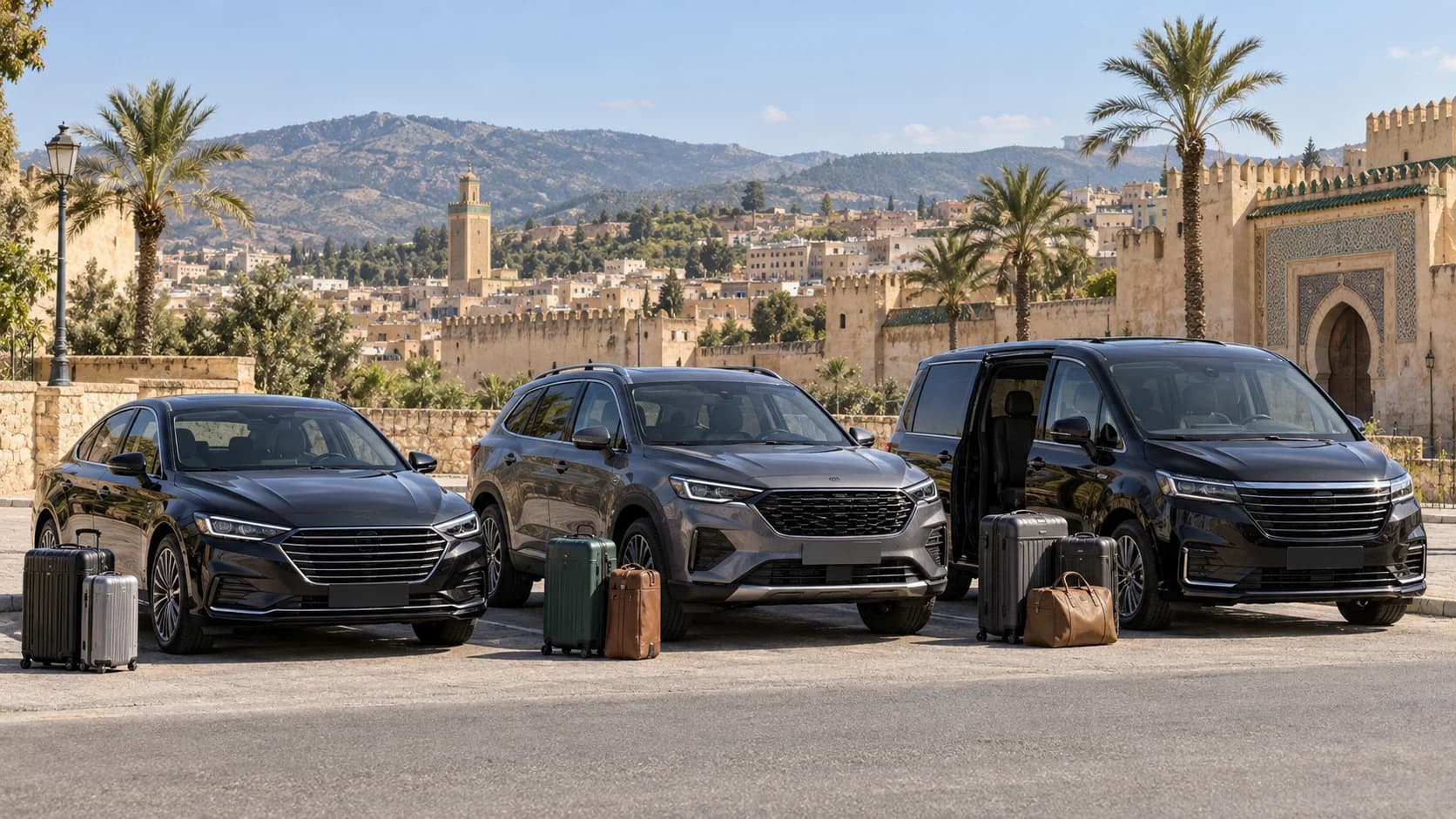
A sedan can work for one or two travelers with light luggage. It is usually the most economical private option, but it may feel limited if you have large suitcases, camera gear or extra bags.
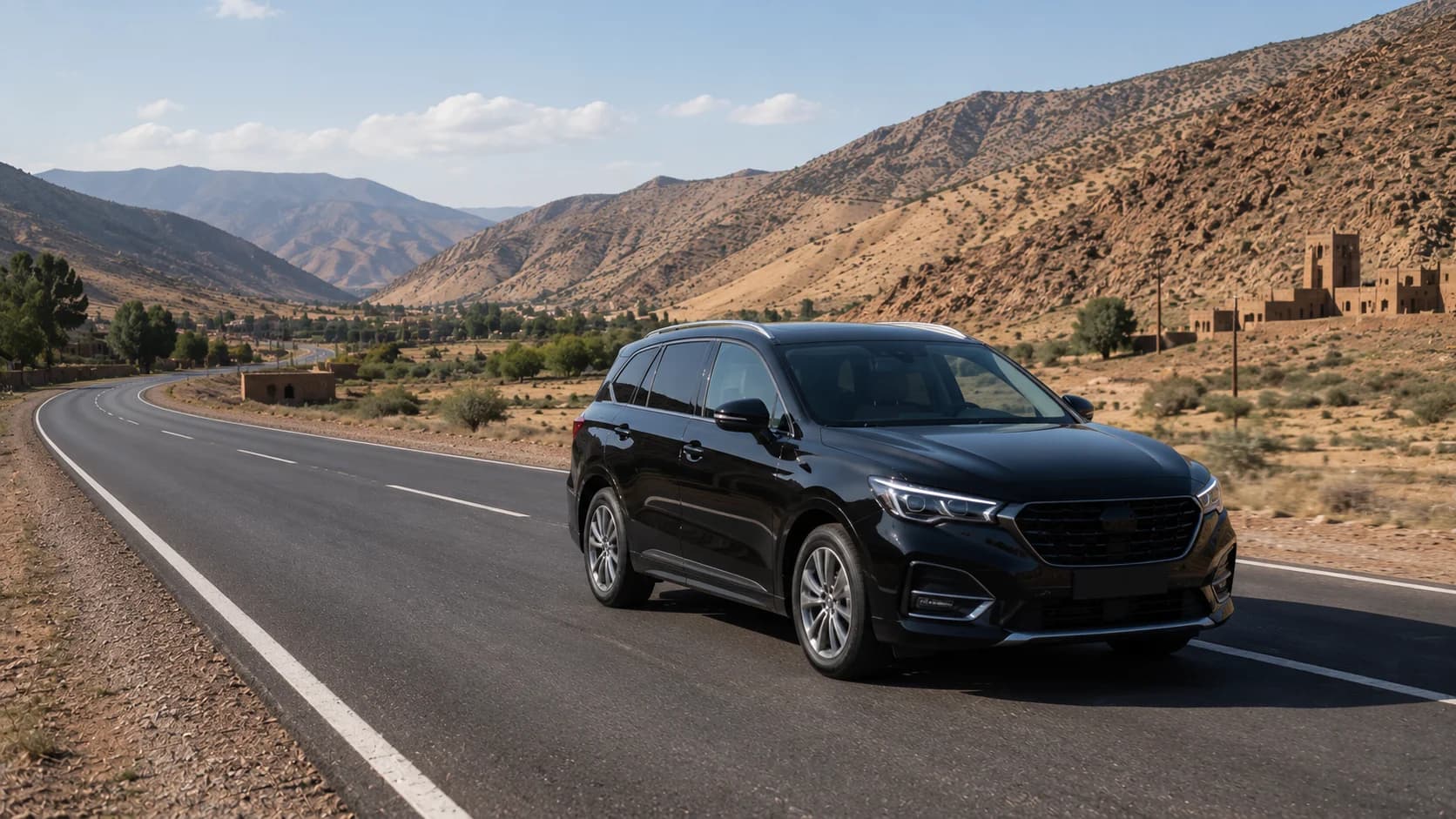
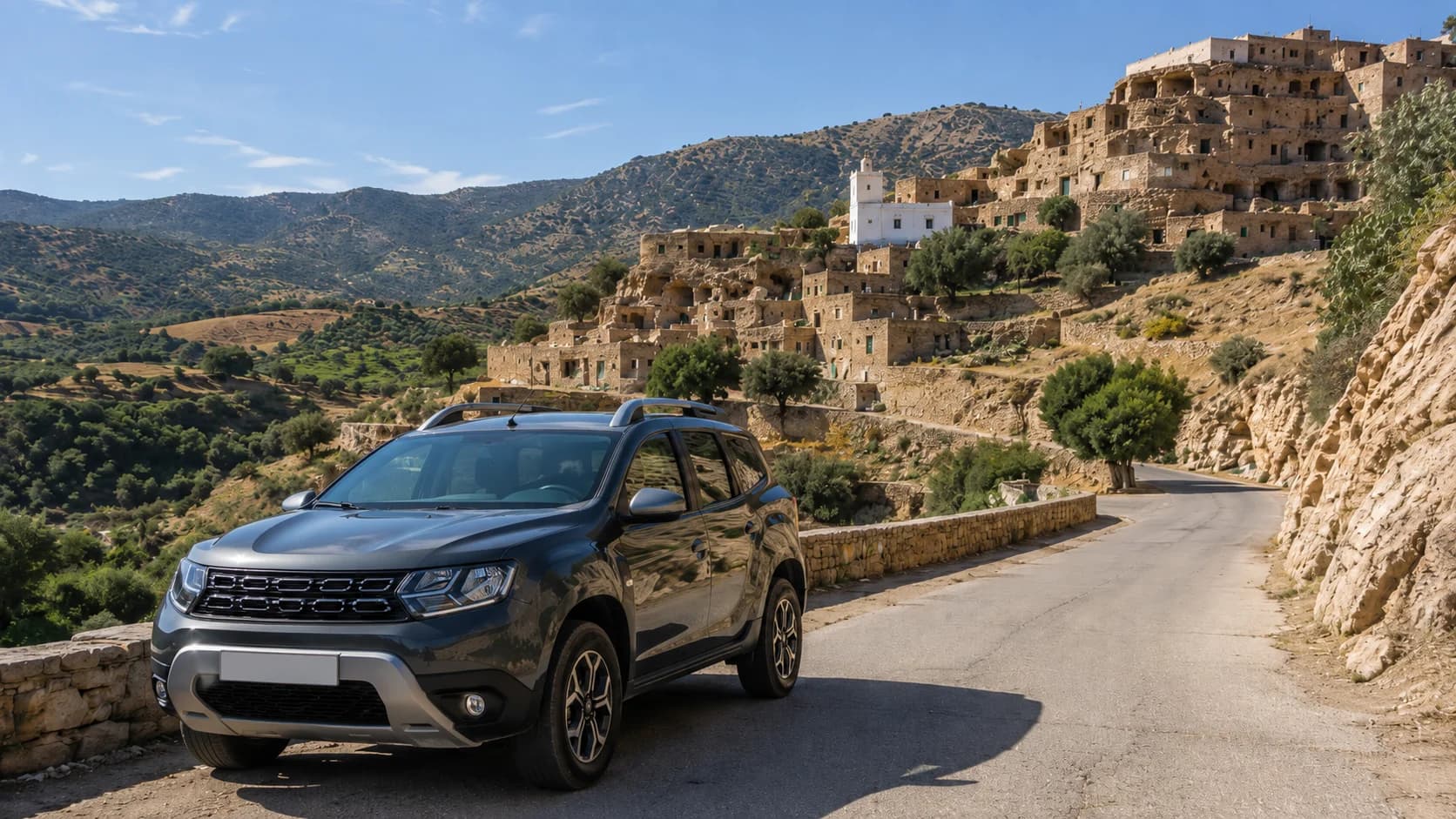
An SUV is a stronger choice for comfort, higher seating and luggage flexibility. It is especially useful for couples who want a premium long-distance ride, small families, winter travel or travelers who prefer a more stable feel on mountain sections. For this route, a Fes SUV transfer is often the safest middle option between price and comfort.
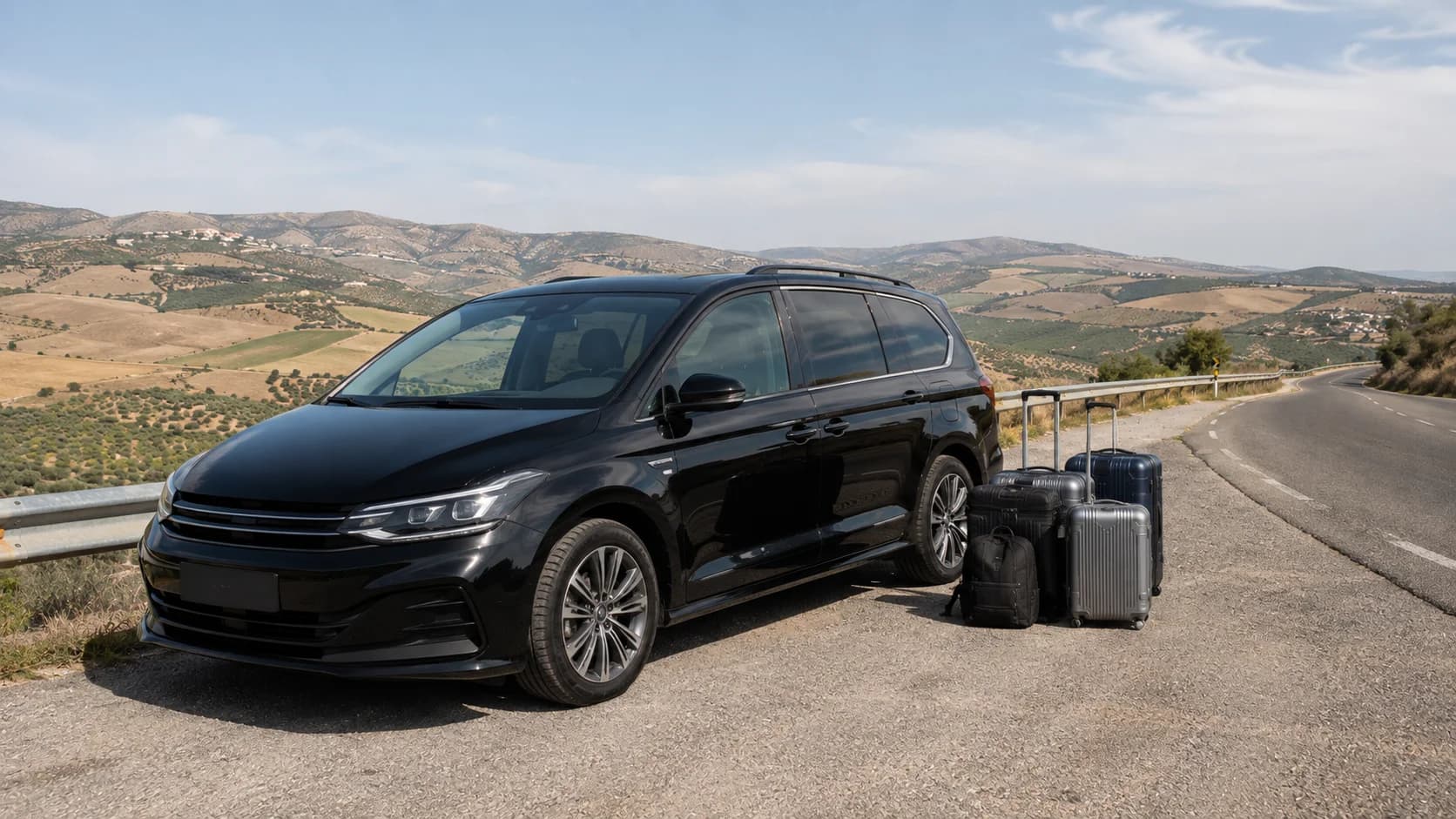
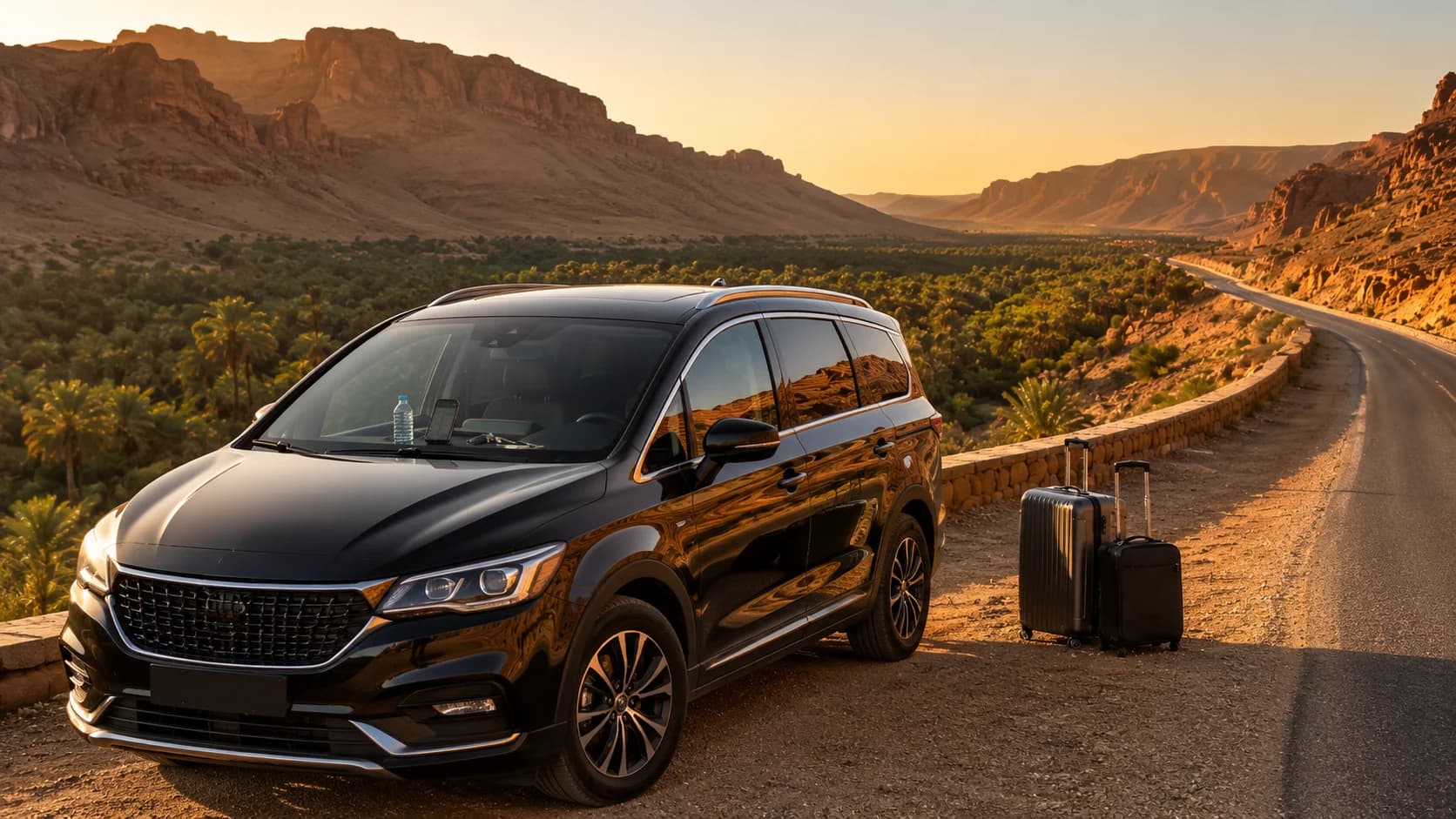
A minivan is best for families and groups. If you are three to seven travelers, a minivan transfer Fes gives better luggage space and a more relaxed cabin. This matters because the drive is long, and everyone needs room to sit comfortably.
A 4x4 may be useful if your desert camp requires access beyond the paved road, but many camps organize the final desert access themselves from a meeting point in Merzouga or Hassilabied. Confirm this before booking so you do not pay for the wrong vehicle.
One-way vs return transfer
A one-way transfer from Fes to Merzouga is best if your Morocco itinerary continues south or west after the desert. Many travelers go from Fes to Merzouga, then continue to Todra Gorge, Dades Valley, Ouarzazate or Marrakech. In that case, returning to Fes may waste a full day.
A return transfer is better if your flights, hotels or train plans are already fixed in Fes. It can also work if you want a direct Sahara escape without changing your wider itinerary. The main point is to avoid underestimating the return. Merzouga to Fes is another long road day, not a short morning drive.
For a one-way transfer, confirm the final drop-off clearly. “Merzouga” can mean the village, a hotel near the dunes, a desert camp meeting point, Hassilabied or another nearby location. For a return transfer, confirm whether the same driver waits overnight, returns later, or operates as two separate transfer legs.
Cedar forest and Barbary apes en route
The Middle Atlas section between Ifrane and Azrou is known for cedar forest landscapes and Barbary macaques, often called Barbary apes by travelers. Ifrane National Park is associated with Atlas cedar ecosystems and Barbary macaques, with the park’s altitude ranging roughly from 1,300 to 2,400 meters.
This can be a nice short stop on the way to Merzouga, especially for families. Keep it simple and respectful. Do not feed the animals, do not crowd them and do not leave food or plastic behind. The stop should feel like a natural break, not the main purpose of the transfer.
In winter, this section can also be colder than travelers expect. Fes may feel mild, while the Middle Atlas can be chilly, wet or snowy during certain periods. A private transfer helps because the driver can adjust the pace and choose safe rest stops along the way.
Luggage and comfort on a long drive
For a Fes to Merzouga private driver, luggage planning matters. Bring a smaller day bag inside the cabin with water, snacks, sunglasses, charger, medicine if needed and a light jacket. Keep large suitcases in the trunk or rear luggage area.
If you are going directly to a desert camp, ask the camp how luggage is handled. Some camps take guests from a village meeting point by 4x4, while others arrange camel access for the final part and transport luggage separately. Your transfer driver needs the exact meeting point and arrival time.
Comfort also depends on seating. For three travelers with large bags, a sedan may feel tight. For four or more travelers, a minivan is usually better. For travelers who want extra comfort on mountain roads and long stretches, an SUV can be worth the upgrade.
Also ask about air conditioning, child seats, charging options and planned breaks. Small details matter on a full-day route.
Cost and fixed-rate booking
A Fes to Merzouga taxi or private transfer should be booked on a fixed-rate basis, not as a vague meter-style ride. The quote should clearly mention pickup point, drop-off point, vehicle type, number of passengers, luggage, one-way or return plan, planned stops and whether the driver’s waiting time is included.
The price can change depending on the vehicle. A sedan is usually cheaper than an SUV, and a minivan costs more because it carries more passengers and luggage. A return transfer may also be priced differently depending on whether the driver stays, returns empty or operates a separate pickup.
Do not compare only the cheapest price. For this route, the most important things are driver reliability, vehicle comfort, clear communication and confirmed timing. A very cheap quote may become expensive if it excludes waiting time, scenic stops, remote camp access or late arrival changes.
For best results, send your pickup location in Fes, your Merzouga hotel or camp name, passenger count, luggage count, travel date and whether you want short scenic stops. Ask for one written fixed price before confirming.
Final Sahara-transfer tips
Start early from Fes so the journey feels controlled. Pack water, sunglasses, a light jacket and anything you need during the ride. Do not overload the day with too many sightseeing stops unless you are happy to arrive late.
Confirm the final Merzouga meeting point, especially if you are staying in a desert camp. Share your driver’s WhatsApp number with the camp if needed, and keep your phone charged.
Choose the vehicle for comfort, not only price. A long Sahara transfer is much easier when passengers have space, luggage fits properly and the driver knows the road.
Most importantly, remember that this is a point-to-point transfer to the desert, not a rushed tour. The best Fes to Merzouga experience is calm, scenic and well-timed, with enough stops to enjoy the road without turning arrival into a race.
Fes to the dunes, your way: book a fixed-rate private transfer to Merzouga via the Ziz Valley, with scenic stops, comfortable vehicle options and door-to-door pickup from your riad, hotel or airport.
FAQs
How do I get from Fes to Merzouga?
The easiest way is by private transfer with a local driver. You can be picked up from your riad, hotel, Fes-Saïss Airport or a meeting point in Fes and dropped at your Merzouga hotel, riad or desert camp meeting point.
How far is Merzouga from Fes?
Merzouga is around 457 to 470 km from Fes by road, depending on your exact pickup and drop-off points.
How long is the drive from Fes to Merzouga?
The direct drive is usually around 7 to 8 hours. With lunch, coffee breaks and photo stops, plan around 8.5 to 10 hours.
What is the route to the Sahara from Fes?
The usual route goes from Fes toward Ifrane and Azrou, then south through Midelt, Errachidia, the Ziz Valley, Erfoud and Rissani before reaching Merzouga.
Which vehicle is best for the desert road?
For one or two travelers, a sedan can work if luggage is light. For more comfort, choose an SUV. For families or groups, a minivan is usually the best option.
Can the driver build in photo stops?
Yes. A private transfer can include short photo stops, especially around Ifrane, the cedar forest, Midelt and the Ziz Valley. Confirm this before booking so the timing is clear.
Is a one-way or return transfer better?
A one-way transfer is better if you continue toward Todra Gorge, Dades, Ouarzazate or Marrakech after the desert. A return transfer is better if your next hotel or flight is back in Fes.
Will I pass the cedar forest and Ifrane?
Most classic Fes to Merzouga transfers pass the Ifrane and Azrou direction, where travelers often stop near cedar forest areas before continuing toward Midelt.
How much is a transfer to Merzouga?
The price depends on vehicle type, passenger number, luggage, one-way or return plan, travel date and planned stops. Ask for a fixed written quote before booking.
Can I book pickup from my riad or hotel?
Yes. Door-to-door pickup is one of the main advantages of a private transfer. If your riad is inside a car-free medina street, the driver will usually meet you at the nearest accessible gate or parking point.