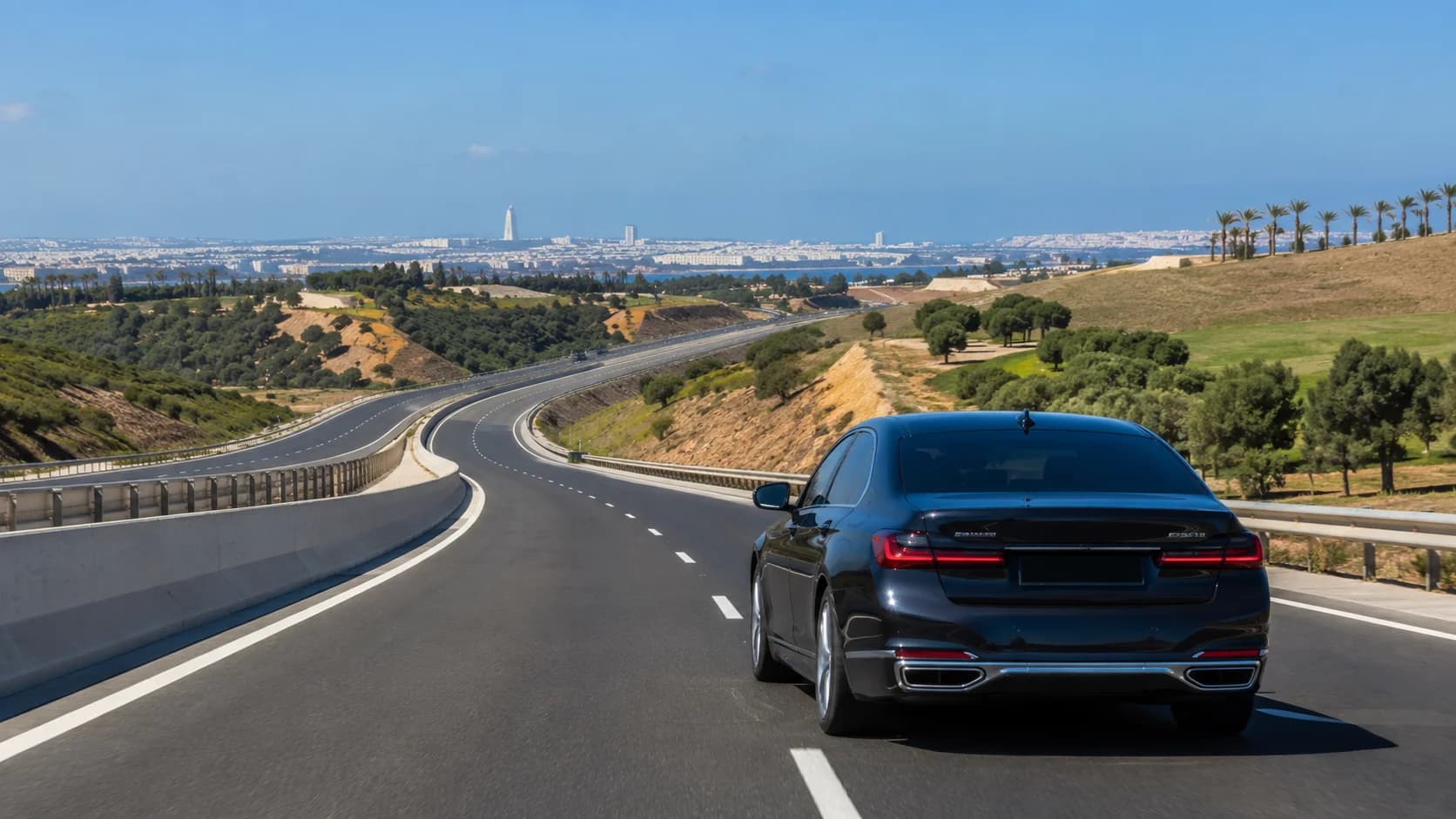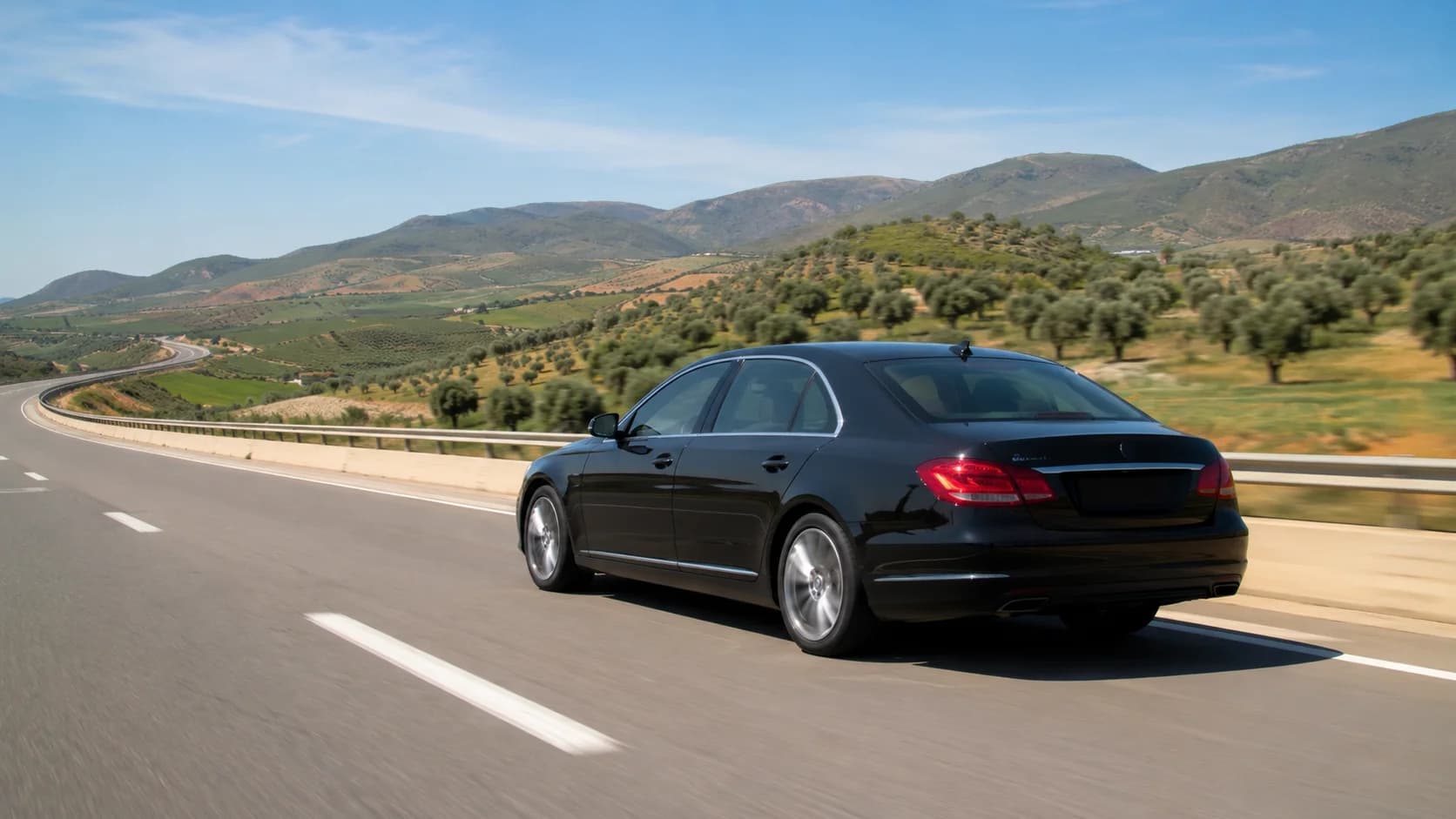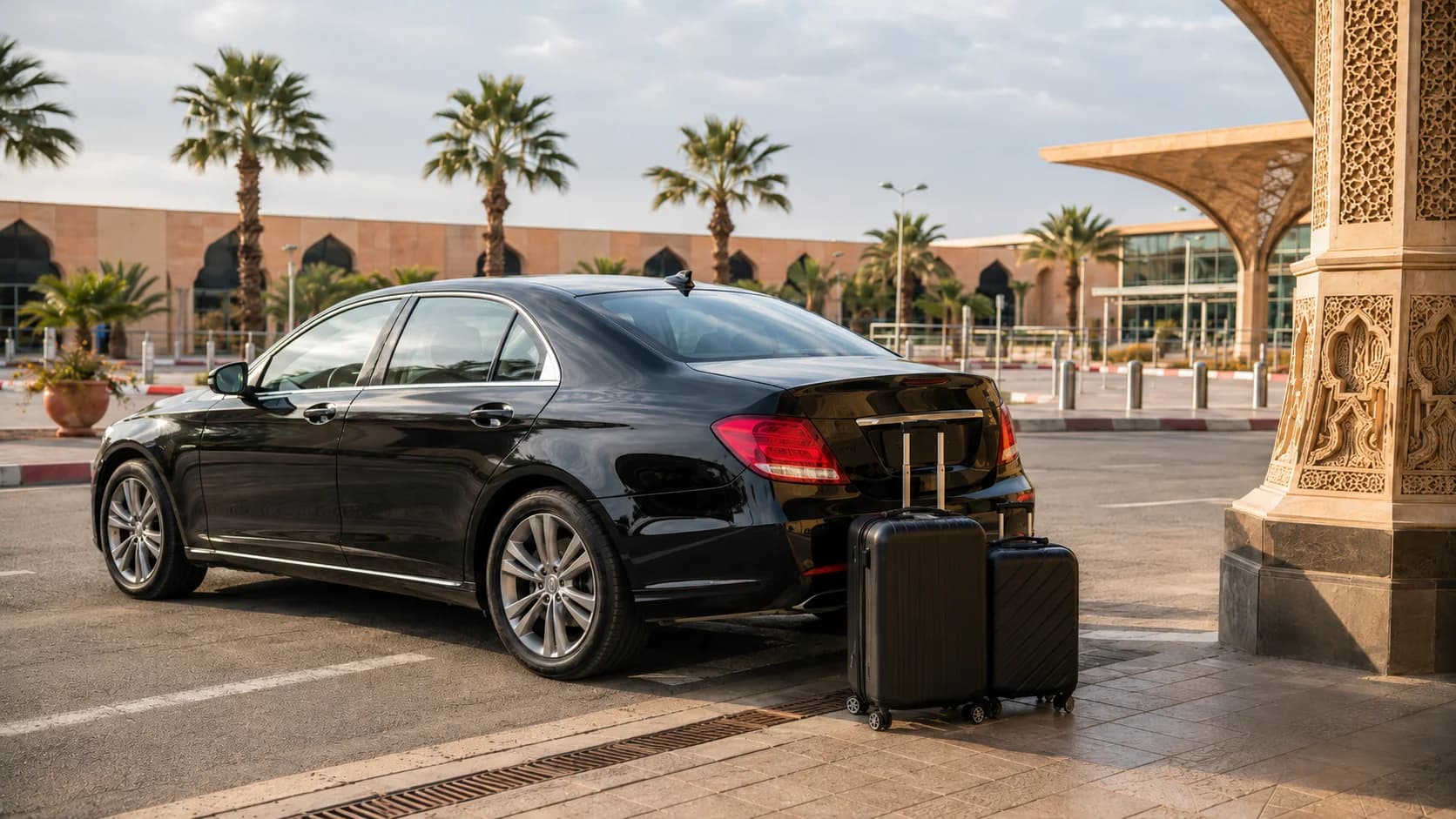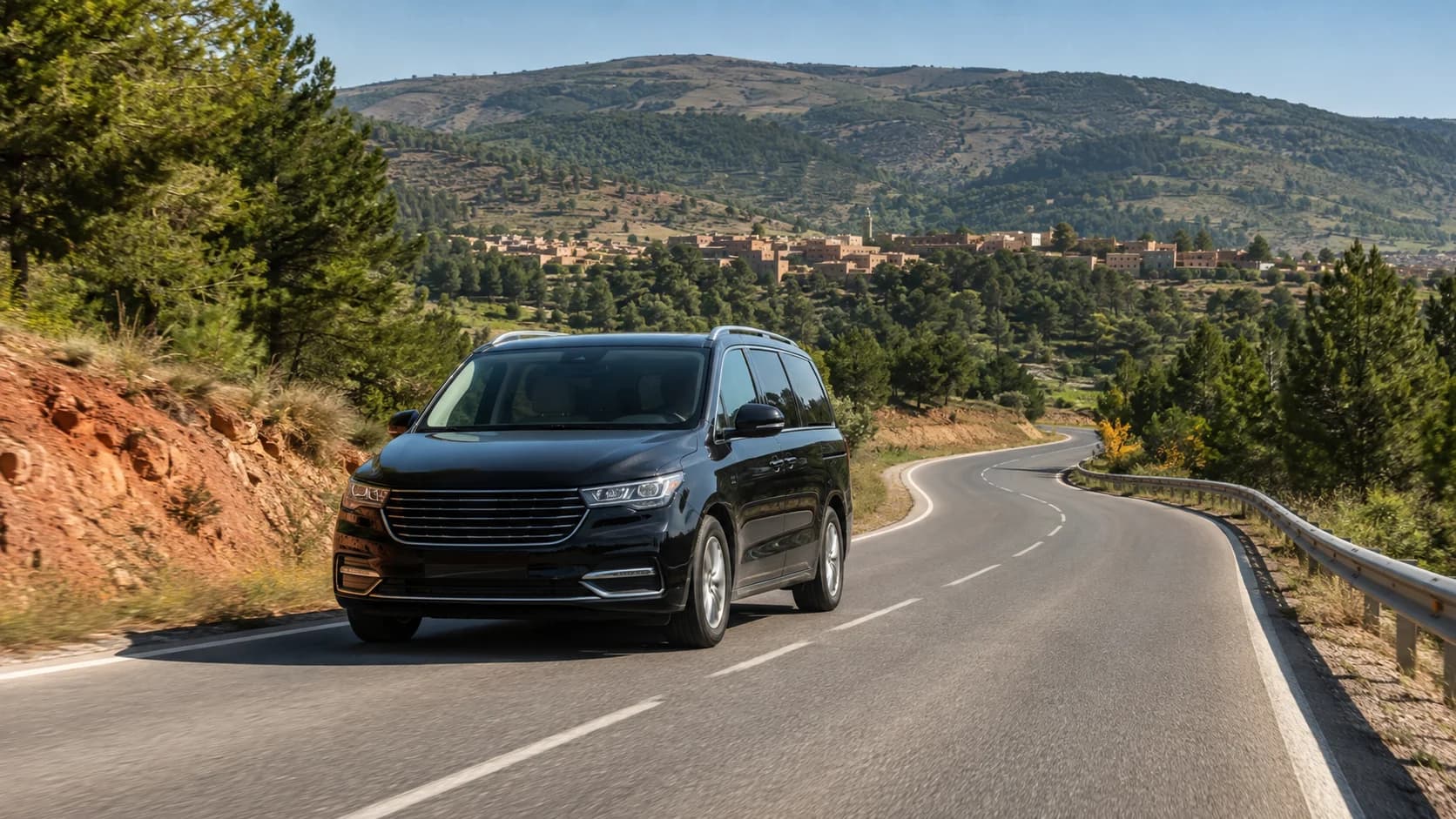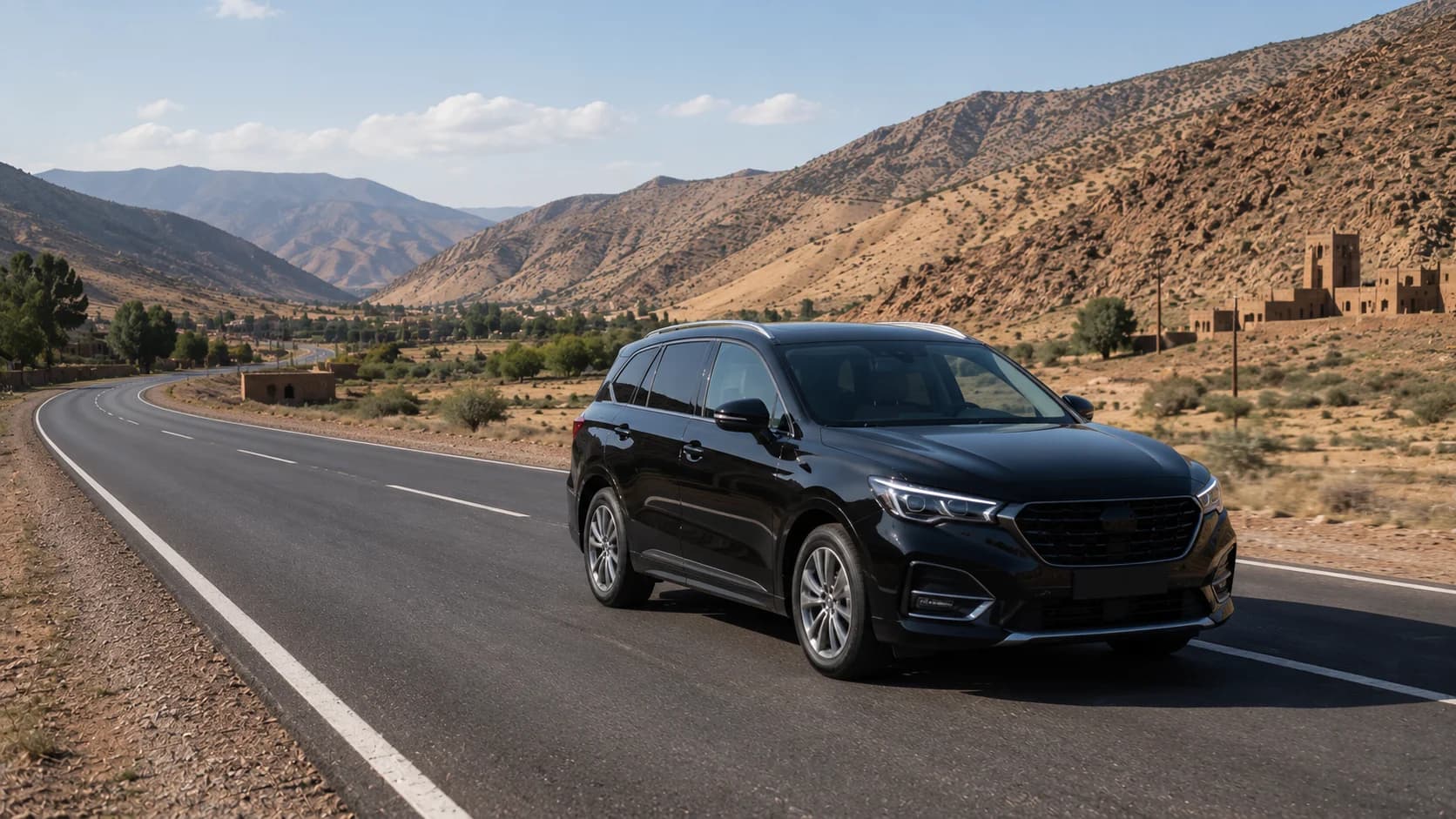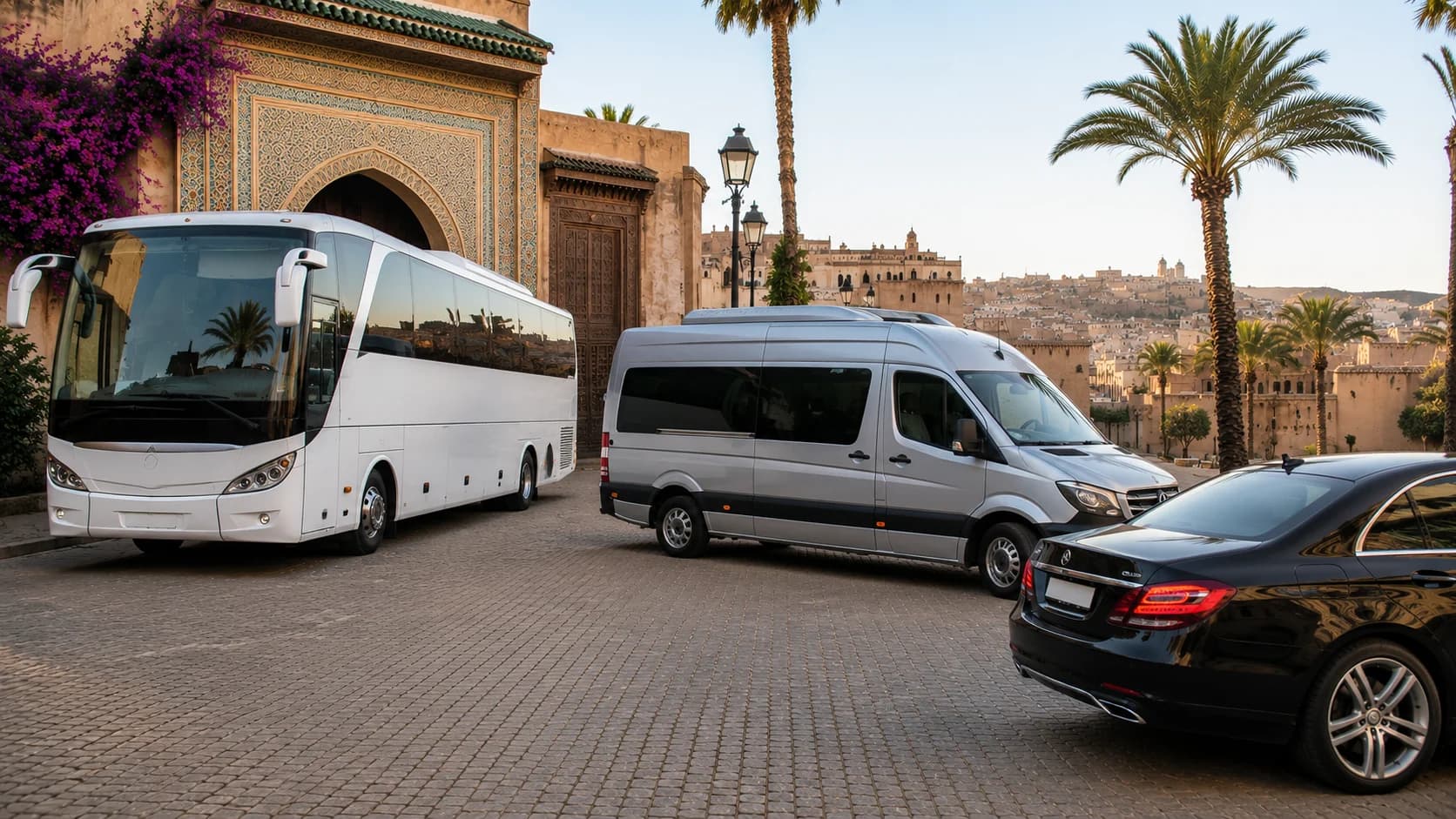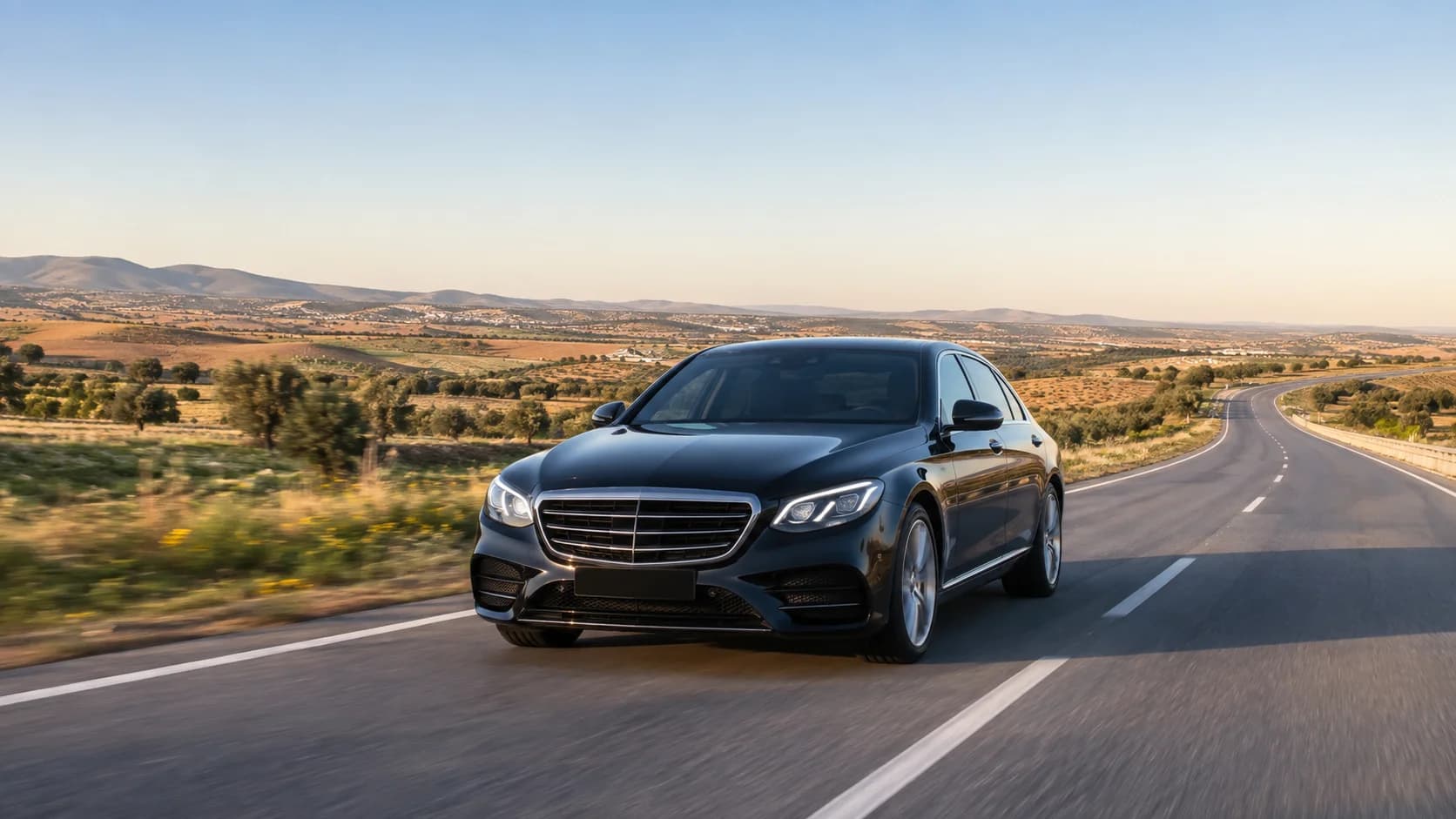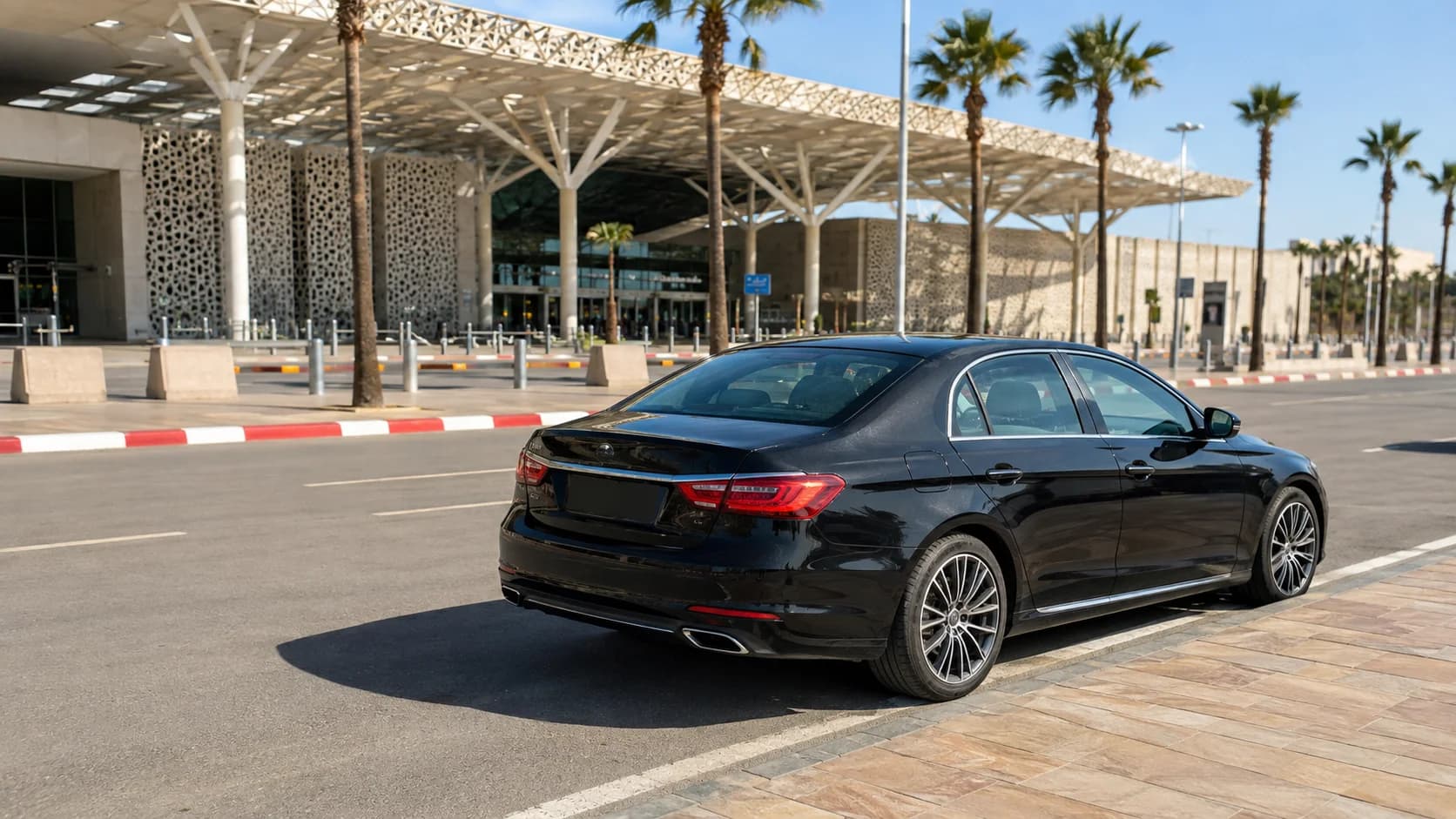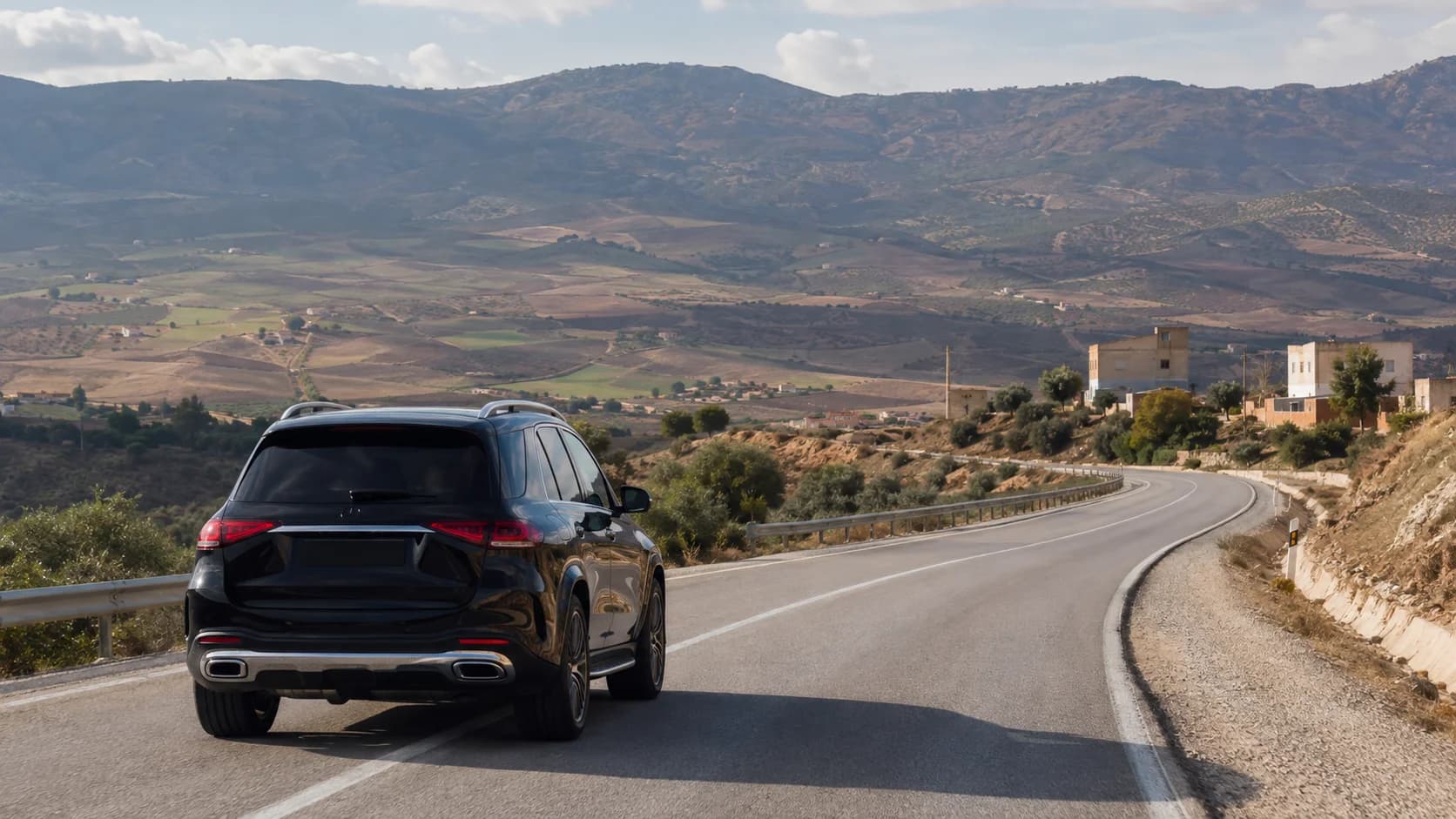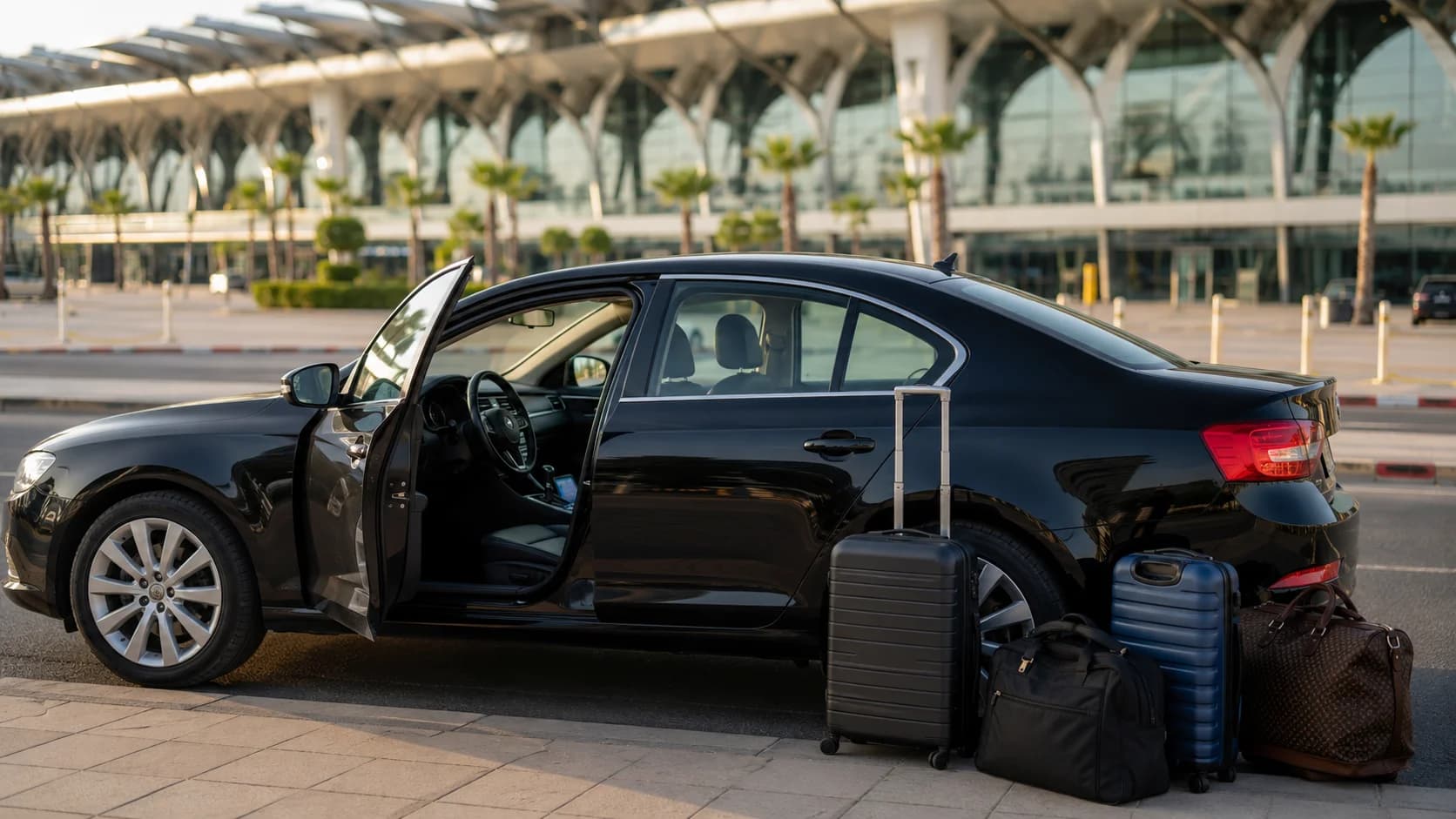








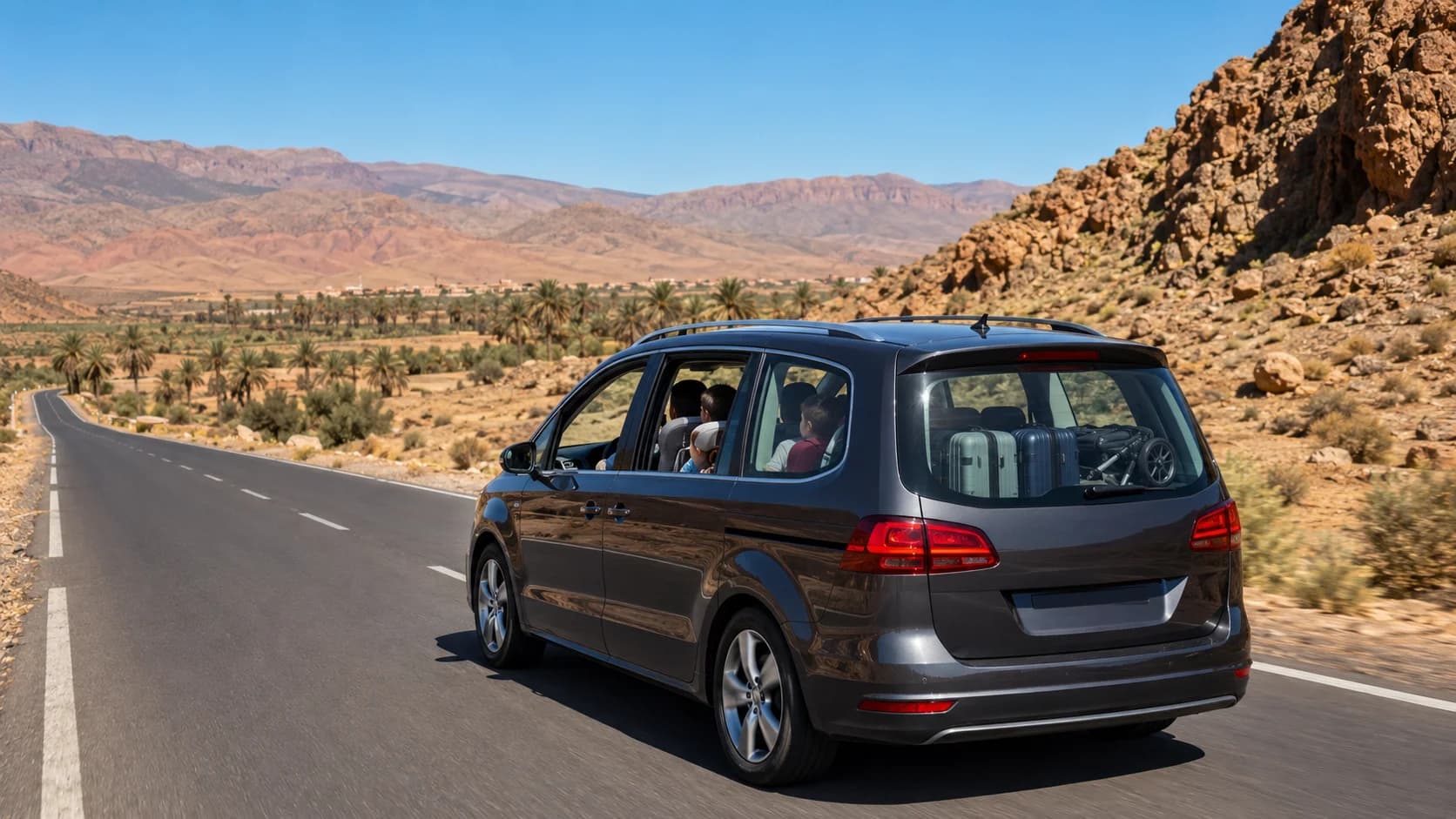
Travelling from Fes to Merzouga with children can be one of the most memorable parts of a family holiday in Morocco. The journey gradually moves from the historic surroundings of Fes through mountain landscapes, inland towns, palm-filled valleys and, finally, the desert environment around Merzouga.
However, this is not a short airport transfer. The road journey is approximately 457 kilometres, depending on the exact pickup and accommodation locations. Driving alone commonly takes seven to eight hours, while a realistic family transfer with meals, bathroom breaks and opportunities for children to move around can take nine to ten hours.
For parents, the most important factors are not simply the distance and price. Child seats, departure time, luggage capacity, scheduled breaks and the final handover to the desert accommodation must all be confirmed before leaving Fes.
Table of Contents
- Is the journey suitable for children?
- Understanding the length of the Fes to Merzouga drive
- Best departure time for families
- Planning rest, meal and comfort stops
- Child seats and age-appropriate restraints
- Choosing between an SUV and minivan
- Luggage, strollers and family equipment
- Motion comfort and practical preparation
- What the transfer includes and excludes
- Family booking checklist
- Frequently asked questions
- Book a family transfer from Fes to Merzouga
Is the Journey Suitable for Children?
Yes, the journey from Fes to Merzouga can be suitable for children when it is arranged as a private, family-focused transfer.
Parents should plan for a full travel day rather than treating it as a simple direct drive. A comfortable journey normally requires:
-
An early morning departure
-
A correctly sized child or baby seat
-
A vehicle with sufficient passenger and luggage space
-
Several planned comfort stops
-
Food, water and suitable clothing
-
Confirmation of the final meeting point in Merzouga
-
Flexibility if a child needs an additional break
The route is long, but a private transfer gives the family more control over timing than a shared bus or fixed group tour. The driver can pause when necessary, and parents do not have to manage vehicle changes or move their luggage between different forms of transport.
Families can arrange dedicated intercity travel from Fes based on their pickup location, number of passengers and final destination near Merzouga.
Understanding the Length of the Fes to Merzouga Drive
The road distance between Fes and Merzouga is generally listed at approximately 457 kilometres. The usual route travels south through or near Ifrane, Azrou, Midelt, Errachidia, the Ziz Valley and Erfoud before reaching Merzouga.
A map may suggest that the journey can be completed quickly, but families should not plan around the minimum theoretical driving time. The route crosses changing terrain, and some mountain sections are slower than wide, straight roads.
The total journey can also be affected by:
-
Traffic when leaving Fes
-
Weather in the Middle Atlas
-
Roadworks or temporary traffic controls
-
Meal and bathroom stops
-
The ages of the children
-
The location of the final hotel or desert meeting point
-
Seasonal daylight hours
Seven to eight hours may be possible with very limited stops, but that schedule is rarely appropriate for a family with babies or younger children. Around nine hours is a more practical starting estimate, and additional time should be allowed when several stops are expected.
Parents should avoid planning a tightly timed desert activity immediately after arrival. A delayed departure, a longer lunch or an unexpected comfort stop can easily shift the arrival time.
Why the Journey Requires Family Planning
Adults may be able to tolerate several hours of continuous driving, but young passengers generally need a different schedule. Babies may need feeding or changing, toddlers may need movement breaks, and older children may become uncomfortable after remaining seated for long periods.
The changing climate along the route also matters. Families can leave cool conditions near Fes or the Middle Atlas and arrive in much warmer weather around Merzouga. Seasonal temperatures, mountain weather and desert conditions may be noticeably different on the same day.
The best family transfer is therefore not necessarily the fastest one. It is the journey that balances progress with safe seating, predictable breaks and realistic expectations.
Before booking, parents should explain:
-
The number of adults and children
-
Each child’s age
-
Approximate height or weight when required for seat selection
-
The number of suitcases
-
Whether a stroller is included
-
Whether the family has oversized equipment
-
The exact destination near Merzouga
-
Any preferred meal or comfort-stop requirements
These details allow the transfer provider to recommend an appropriate vehicle instead of assigning one based only on passenger count.
Best Departure Time for Families
For most families, leaving Fes early in the morning is the most comfortable choice.
A departure between approximately 7:00 and 8:00 allows the family to complete a meaningful part of the journey before lunchtime. It also provides a buffer for additional stops without making the arrival excessively late.
Advantages of a Morning Departure
An early departure gives families several practical benefits:
-
Children may sleep during the first part of the journey
-
The vehicle can leave Fes before heavier daytime traffic
-
More of the route is completed during daylight
-
Meal stops can be planned at a normal time
-
There is more flexibility if someone becomes uncomfortable
-
The family is less likely to reach Merzouga late at night
Leaving after 10:00 may result in an evening arrival, particularly when the family needs several breaks. This can create difficulties when the accommodation requires a separate meeting, 4x4 ride or other onward arrangement.
Families arriving at Fes Airport on the same morning should be cautious about immediately beginning the full desert journey after a long flight. Flight delays, immigration, luggage collection and tired children can make the day much longer than expected.
Where possible, spending the previous night in Fes and departing after breakfast usually creates a calmer start.
Planning Rest, Meal and Comfort Stops
A private family transfer from Fes to Merzouga should be flexible, but it should not be completely unstructured. It is useful to agree on a general stop plan before departure while keeping the option to add a brief break when necessary.
A family might divide the journey into several manageable sections.
First Comfort Stop
The first stop may be made after leaving Fes and crossing into the Middle Atlas area. Depending on the family and route conditions, this can be a short bathroom, coffee or stretching break.
There is no need to turn every stop into sightseeing. For younger children, ten or fifteen minutes outside the vehicle may be more useful than extending the day with several attractions.
Lunch Around the Middle of the Journey
Midelt is commonly associated with the route between northern Morocco and the desert regions. It can provide a practical point for a longer meal break, although the exact restaurant or stop should depend on timing and the driver’s local knowledge.
Parents should avoid a very heavy lunch if a child is sensitive to motion. A simple meal followed by a few minutes of walking may be more comfortable for the remaining drive.
Afternoon Comfort Stop
Another short break can be planned around Errachidia, the Ziz Valley or farther south, depending on the family’s progress.
The scenery changes significantly as the journey approaches the desert region. A brief viewpoint stop may be possible, but it should not replace necessary bathroom and movement breaks.
How Often Should Families Stop?
There is no single schedule that suits every child. As a general planning approach, families may consider a break every two to three hours, with additional stops for babies, toilet needs or discomfort.
Parents should tell the driver as soon as a stop is needed rather than waiting until the child becomes extremely uncomfortable. The exact stopping location must still be safe and suitable, so an immediate roadside stop may not always be possible.
Child Seats and Age-Appropriate Restraints
Child-seat requirements should be discussed before the vehicle is assigned.
Morocco’s National Road Safety Agency advises that children should be secured during both short and long journeys. It also recommends choosing a child seat suited to the child’s age and, more importantly, physical size, securing it correctly and checking the belt position and installation.
Parents should provide the child’s:
-
Age
-
Approximate weight
-
Approximate height
-
Preferred seat type, when known
-
Number of required seats
Simply writing “one child seat” may not provide enough information. An infant carrier, toddler seat and booster are not interchangeable.
For babies using a rear-facing restraint, the seat’s position and the vehicle’s airbag configuration must be considered. Morocco’s road-safety guidance notes that an infant seat placed against the direction of travel requires the airbag for that occupied position to be deactivated.
Parents bringing their own child seat should mention this during booking. The provider still needs to confirm that the selected vehicle has suitable seating space and installation points.
Never assume that a child seat will automatically be included. Request it clearly and ask for confirmation before the pickup date.
Choosing Between an SUV and Minivan
Both SUVs and minivans can be appropriate for a Fes desert transfer with children, but the best option depends on the family’s complete travel setup.
When an SUV May Be Suitable
An SUV may work well for:
-
Two adults with one or two children
-
Families with moderate luggage
-
Travellers who prefer a higher seating position
-
Accommodation reached through normal paved access
-
Smaller family groups that do not need multiple seat rows
An SUV can offer useful cabin comfort and luggage capacity, but models differ substantially. A compact SUV may have less boot space than parents expect once a stroller and several suitcases are added.
Families should therefore confirm the approximate vehicle category and capacity rather than relying on the word “SUV” alone.
Explore available Fes SUV transfer options for families travelling toward Merzouga.
When a Minivan Is Better
A minivan is often the more practical option for:
-
Families with three or more children
-
Groups requiring multiple child seats
-
Parents travelling with a large stroller
-
Families carrying several large suitcases
-
Multigenerational groups
-
Passengers who want easier access to separate seating rows
The main advantage is not simply the number of seats. A larger cabin can reduce crowding and help parents access bags, snacks or children more easily during scheduled stops.
A private minivan transfer from Fes can be particularly useful when cabin space and luggage capacity are equally important.
Is a 4x4 Required?
A normal road vehicle can reach Merzouga village and many accommodations accessible from paved roads. A 4x4 is generally relevant when the final property or desert camp requires travel beyond normal road access. Many camps arrange their own onward transport from a defined meeting point near Merzouga.
Parents should not assume that an SUV transfer automatically includes driving across sand. The transfer provider must know the exact accommodation or meeting point to determine where the road transfer ends.
Luggage, Strollers and Family Equipment
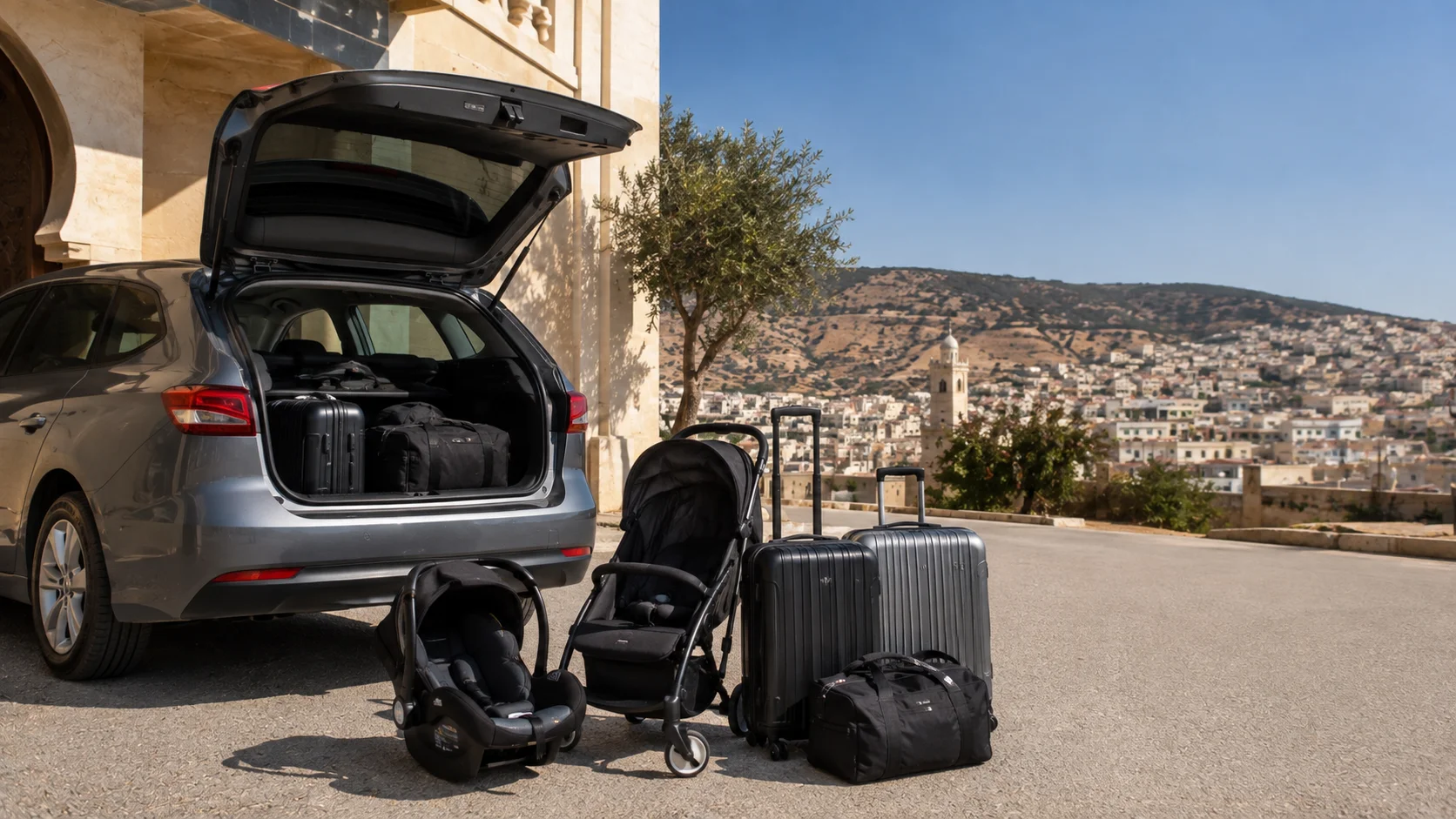
Passenger count is only one part of vehicle selection. Total luggage volume is equally important.
A family of four may carry:
-
Four large suitcases
-
Cabin bags
-
A folding stroller
-
A child seat
-
A changing bag
-
Food and water
-
Jackets or blankets
-
Electronics and children’s entertainment
Although the family occupies only four passenger seats, this amount of equipment may exceed the practical luggage capacity of a standard vehicle.
Parents should share both the number and approximate size of their bags. “Four pieces of luggage” could mean four compact cabin bags or four large suitcases, which require very different boot space.
Travelling With a Stroller
Mention whether the stroller is:
-
Compact and foldable
-
A full-sized pushchair
-
A double stroller
-
Packed in a protective travel bag
A large stroller can occupy much of an SUV’s luggage area. In that case, a minivan may be the more comfortable choice even for a relatively small family.
Avoid placing unsecured luggage in the passenger cabin. Bags should not interfere with seat belts, child-seat installation or access to doors.
Motion Comfort and Practical Preparation
Parts of the road pass through mountain terrain, so children who experience travel sickness may need additional preparation.
Parents should follow any medical advice they have received for their child rather than relying on general internet recommendations. Practical non-medical preparations may include:
-
Offering a light breakfast
-
Keeping water easily accessible
-
Avoiding excessive screen use on winding sections
-
Packing spare clothing
-
Carrying wipes and sealable bags
-
Choosing simple snacks
-
Encouraging children to look outside
-
Requesting a short break before discomfort becomes severe
The family should also prepare for temperature changes. A light layer may be useful in cooler mountain areas, while sun protection and lighter clothing may be needed closer to Merzouga.
Entertainment for the Drive
Bring activities that are easy to use while seated and do not create many loose objects inside the vehicle.
Suitable options may include:
-
Audiobooks
-
Downloaded music
-
Soft toys
-
Simple travel games
-
Colouring materials for older children
-
Offline films for straighter sections
-
A child-friendly map of the journey
Download entertainment before leaving Fes because mobile coverage can vary along long intercity routes.
Parents should also keep important items in a small accessible bag rather than packing everything inside the main suitcases.
What the Transfer Includes and Excludes
Families should distinguish between a private road transfer and a complete Sahara tour.
A transfer usually concerns transportation from an agreed pickup point in Fes to an agreed drop-off or meeting point near Merzouga. Depending on the provider and selected service, it may include:
-
Private vehicle
-
Professional driver
-
Hotel, riad or airport pickup
-
Agreed comfort stops
-
Requested child seats, when confirmed
-
Luggage transport within the vehicle’s capacity
-
Direct travel to the agreed destination
The exact service must be confirmed at booking.
A standard transfer may not automatically include:
-
Desert camp accommodation
-
Hotel rooms
-
Lunch or drinks
-
Camel activities
-
Quad-bike activities
-
Guided sightseeing
-
Admission fees
-
A separate 4x4 ride to a remote camp
-
Return transportation
-
An onward journey to Marrakech or another city
Sahara Handover in Merzouga
Some desert camps and remote accommodations use a meeting point in or near Merzouga. Guests may then continue by the camp’s vehicle or another arranged method.
Parents should ask their accommodation:
-
Where exactly should the driver take us?
-
Is the property directly accessible by road?
-
Is a separate transfer required?
-
What time is the latest recommended arrival?
-
Who will meet the family?
-
Is the onward vehicle equipped appropriately for children?
-
How will the main luggage be transported?
The road-transfer company and desert accommodation should both receive the correct arrival details.
Family Booking Checklist
Before confirming a child seat transfer from Fes to Merzouga, parents should provide the following information.
Passenger Details
-
Number of adults
-
Number of children
-
Age of every child
-
Approximate child height or weight when requested
Seating Requirements
-
Infant carrier
-
Rear-facing seat
-
Forward-facing child seat
-
Booster seat
-
Family-provided restraint
Luggage Details
-
Number of large suitcases
-
Number of cabin bags
-
Stroller type
-
Special family equipment
-
Any unusually large items
Journey Details
-
Pickup address in Fes
-
Hotel, riad or airport pickup
-
Preferred departure time
-
Destination or meeting point in Merzouga
-
Accommodation contact information
-
Planned desert-camp handover
Comfort Requirements
-
Expected frequency of stops
-
Meal-stop preference
-
Motion-sickness concerns
-
Mobility requirements
-
Need for additional cabin space
Booking Confirmation
Parents should receive confirmation of:
-
Vehicle category
-
Child-seat availability
-
Luggage capacity
-
Pickup time
-
Pickup point
-
Destination
-
Transfer price and payment terms
-
Included and excluded services
-
Emergency or driver contact process
The more information provided in advance, the less likely the family is to face a vehicle-capacity or seating problem on the morning of departure.
Frequently Asked Questions
Is the drive from Fes to Merzouga suitable for young children?
Yes, it can be suitable when arranged in a comfortable private vehicle with the correct child restraints and sufficient breaks. Parents should treat it as a full-day journey and avoid an overly tight arrival schedule.
How long does the journey take with family stops?
The road distance is approximately 457 kilometres, and direct driving commonly requires around seven to eight hours. With meals, bathroom stops, feeding and movement breaks, families should often allow approximately nine to ten hours.
What time should families leave Fes?
A departure between approximately 7:00 and 8:00 is generally practical. It provides more daylight, creates time for several stops and reduces the likelihood of arriving in Merzouga very late.
Can I request a baby or child seat?
Child seats may be requested, but the requirement should be confirmed in advance. Provide the child’s age, height and approximate weight so the provider can identify the appropriate restraint.
How often can we stop during the journey?
A private transfer normally provides more flexibility than shared transportation. Families may plan breaks approximately every two to three hours and request additional stops when necessary, subject to finding a safe stopping location.
Is an SUV or minivan better for a family?
An SUV may suit a smaller family with moderate luggage. A minivan is usually better for larger groups, multiple child seats, large strollers or several suitcases. Vehicle selection should be based on passengers and luggage together.
Will a stroller and several suitcases fit?
That depends on the stroller’s folded size, suitcase dimensions and selected vehicle. Share the complete luggage list before booking. A minivan may be required even when the passenger count would technically fit inside an SUV.
What should children bring for the drive?
Useful items include water, simple snacks, spare clothing, wipes, sun protection, a light layer, downloaded entertainment and any personal comfort items. Keep essential supplies in an accessible cabin bag.
Does the transfer include a desert tour or hotel?
Not automatically. A private transfer generally covers transportation to the agreed Merzouga destination or meeting point. Accommodation, camel activities, guided tours and remote camp transfers should be booked and confirmed separately unless expressly included.
How early should I book a family transfer?
Book as early as practical, particularly when travelling during school holidays or requiring several child seats or a large minivan. Early booking provides more time to confirm the correct vehicle, restraints and desert accommodation handover.
Book a Family Transfer From Fes to Merzouga
The journey from Fes to the Sahara does not need to feel rushed or difficult. With an appropriate vehicle, correctly requested child seats, sufficient luggage room and a realistic stop plan, families can make the drive part of the Morocco experience.
The key is to confirm every practical detail before departure. Parents should share the children’s ages, seating requirements, luggage volume, stroller size and exact destination near Merzouga. This allows the transfer to be planned around the family rather than forcing the family into a standard transport schedule.
Plan the Sahara journey around your family. Reserve a private Fes to Merzouga transfer with the right child seats, luggage capacity and comfort-stop plan confirmed in advance.