








Traveling from Fes to another Moroccan city often comes down to two practical choices: taking the train or arranging a private transfer. But the best option depends less on which mode is universally “better” and more on where you are going, how much luggage you have, who you are traveling with, and what happens before and after the main journey.
For travelers comparing private transfer vs train Fes, Morocco’s rail network can be an excellent choice for major rail-connected cities such as Meknes, Rabat and Casablanca. A private transfer becomes more useful when your destination is outside the railway network, when you are traveling as a family or group, or when door-to-door convenience matters more than minimizing the base transport cost.
The most useful comparison is therefore not simply “driver versus train.” It is the complete journey from your accommodation in Fes to the actual door of your next hotel, riad, airport or destination.
Table of Contents
- Quick answer: private transfer or train from Fes?
- When train travel is a strong option
- When door-to-door transfer is more practical
- Destinations with and without useful rail connections
- Luggage and station-transfer considerations
- Families, groups and per-person logistics
- Total journey complexity vs ticket price alone
- Decision checklist by traveler type
- Frequently asked questions
Quick Answer: Private Transfer or Train From Fes?
Choose the train when your destination has a convenient rail connection, you are traveling relatively light, and getting between your accommodation and the stations is straightforward.
Consider a private transfer when the destination has no practical rail connection, you have several suitcases, you are traveling with children or a group, or you want one vehicle from your Fes accommodation directly to your final destination.
Morocco's ONCF rail network connects Fes with important parts of the country, including Meknes, Kenitra, Rabat, Casablanca, Marrakech and the eastern rail corridor toward Oujda and Nador. Tangier is also accessible through the rail network, although the exact itinerary can involve connections depending on the selected service. Travelers should check the current timetable for their date rather than assuming every journey operates in exactly the same way.
However, many popular destinations around Fes—including Chefchaouen, Ifrane, Azrou and the Merzouga region—do not have direct railway stations. Reaching them requires road transportation for at least part of the journey.
That difference is often the deciding factor.
At a glance
| Travel situation | Usually more practical |
|---|---|
| Fes to Meknes with light luggage | Train |
| Fes to Rabat city center | Train can be very practical |
| Fes to Casablanca near a station | Train |
| Fes to Chefchaouen | Private transfer / road transport |
| Fes to Ifrane or Azrou | Private transfer / road transport |
| Fes to Merzouga | Private transfer / road transport |
| Family with children and several bags | Private transfer often easier |
| Solo traveler with one small suitcase | Train often makes sense |
| Group traveling to the same hotel | Compare private transfer carefully |
| Hotel far from the arrival station | Compare total door-to-door journey |
When Train Travel Is a Strong Option
A balanced Fes train vs private driver comparison should recognize that Morocco's railway system is a very useful way to travel between several major cities.
Train travel is particularly attractive when both ends of the trip work well with the railway network.
For example, if you are staying somewhere with relatively straightforward access to Fes railway station and your next hotel is conveniently located in central Rabat or Casablanca, the train may offer a simple journey without needing a private vehicle for the whole distance.
Train travel tends to work best when:
-
You are traveling alone or as a couple.
-
Your luggage is easy to carry.
-
Both cities have useful railway stations.
-
You do not mind arranging a taxi or other transportation to and from the station.
-
Your schedule fits the available departure times.
-
You prefer public transport for longer intercity travel.
-
Your hotel is relatively convenient to reach from the arrival station.
The official ONCF network includes the Fes–Meknes–Kenitra corridor, which connects onward to Rabat, Casablanca and other parts of the Moroccan rail system. Al Boraq high-speed services operate between Tangier, Kenitra, Rabat and Casablanca, with ONCF describing Kenitra as a connection point for conventional services serving Fes and Meknes.
For travelers going between established railway cities, that makes train travel an option that should genuinely be considered rather than automatically choosing a car.
Before departure, check current schedules using the official ONCF journey planner because schedules, connections and individual services can change.
When Door-to-Door Transfer Is More Practical
A Fes intercity transfer solves a different problem.
Instead of moving you from one transport terminal to another, it can connect your actual starting point with your actual destination.
That difference becomes important when a train journey would look something like this:
Riad → local taxi → Fes station → train → arrival station → second taxi → hotel
A private transfer may instead be:
Accessible pickup point near your riad → private vehicle → hotel
The rail journey can still be the right choice. But the comparison should include all of those steps.
Private transfer becomes particularly useful when:
-
Your destination has no railway station.
-
Your accommodation is far from a useful station.
-
You have large or multiple suitcases.
-
You are traveling with young children.
-
Several people are traveling together.
-
You need an early departure or specific pickup time.
-
You want hotel-to-hotel transportation.
-
You are combining transportation with stops along the route.
-
Someone in the group has limited mobility.
-
You prefer not to manage connections after a long travel day.
A private driver also removes the need to synchronize several separate pieces of transportation.
That does not necessarily make it the cheaper choice. It makes it a different kind of service.
For one traveler on a straightforward rail route, the train can make more financial sense. For four or more travelers moving together, the calculation changes because the vehicle cost is shared across the group while train tickets are generally purchased per passenger.
Destinations With and Without Useful Rail Connections
The destination is often the easiest way to decide between private transfer Morocco vs train.
Fes to Meknes
Meknes is on the railway network west of Fes.
For a traveler with manageable luggage whose destination is reasonably convenient from Meknes station, the train is usually one of the first options worth checking.
A private transfer may still be preferable if the final destination is outside central Meknes, you have substantial luggage, or you want direct hotel-to-hotel travel.
Fes to Rabat
Rabat is well integrated into Morocco's rail network.
For solo travelers, couples and passengers traveling light, train travel can be highly practical.
However, compare where you are actually staying. A traveler leaving a Fes medina riad and heading to accommodation away from the railway station in Rabat still needs to include transport at both ends.
Fes to Casablanca
Casablanca is another strong railway destination.
The train can make excellent sense when the passenger's final destination works conveniently with Casa Voyageurs or another relevant station.
If you have business equipment, several suitcases, young children or accommodation requiring another long transfer after arrival, door-to-door transportation deserves comparison.
Fes to Marrakech
Marrakech is part of the national rail network through the Casablanca–Marrakech corridor, and ONCF operates passenger services across the Marrakech–Casablanca–Fes axis.
For travelers comfortable with a longer rail journey, it can be a sensible option.
For a family with several bags traveling directly between hotels, however, it is worth comparing the full journey rather than looking only at the train segment.
Fes to Tangier
Tangier is accessible through the railway network, with connections through the northern rail corridor. Exact services and whether a change is necessary depend on the timetable selected.
Check the specific travel date rather than assuming a particular departure is direct.
Fes to Chefchaouen
Chefchaouen does not sit on Morocco's railway network.
A traveler choosing rail would therefore still need to switch to road transport during the journey.
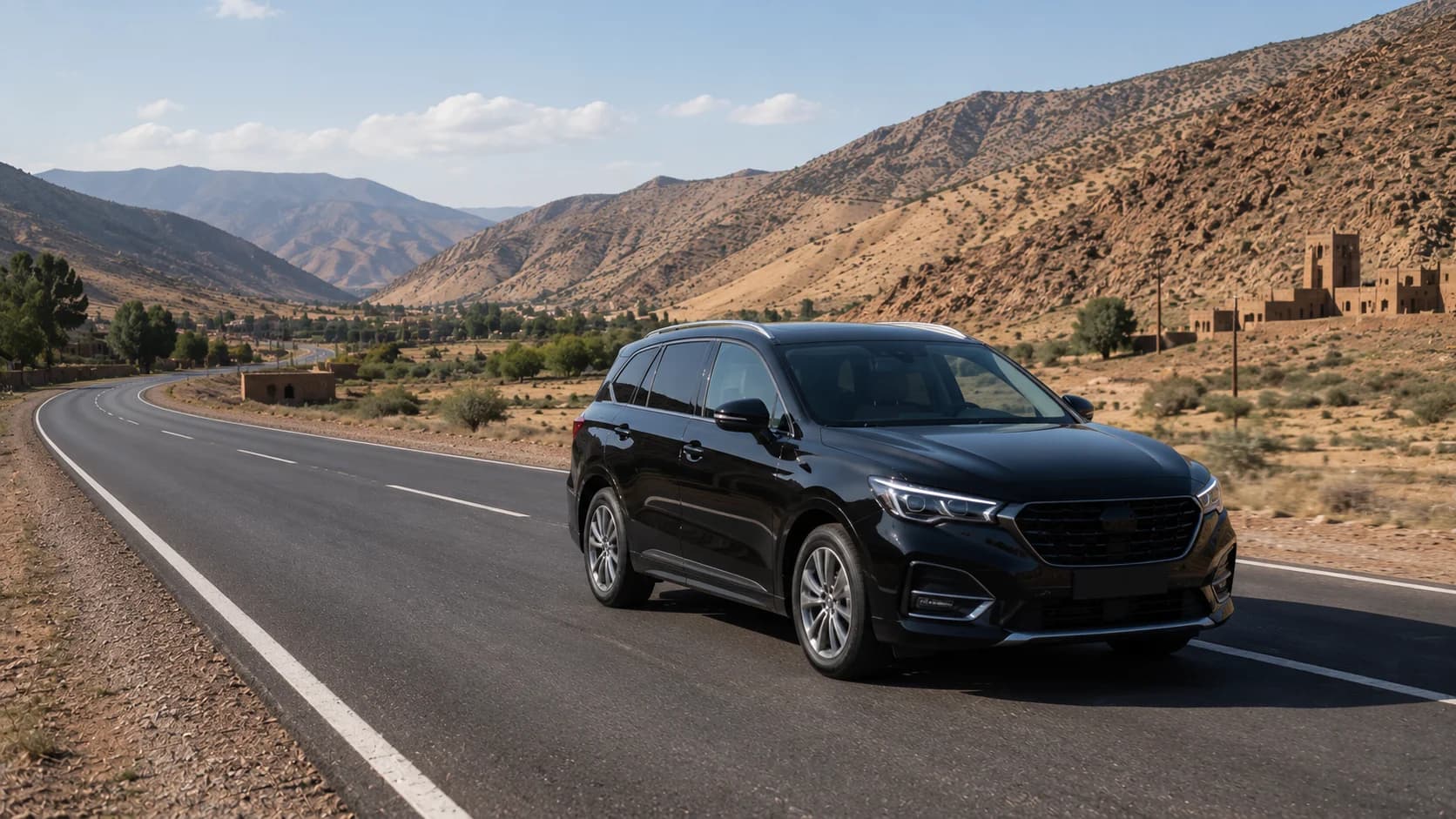
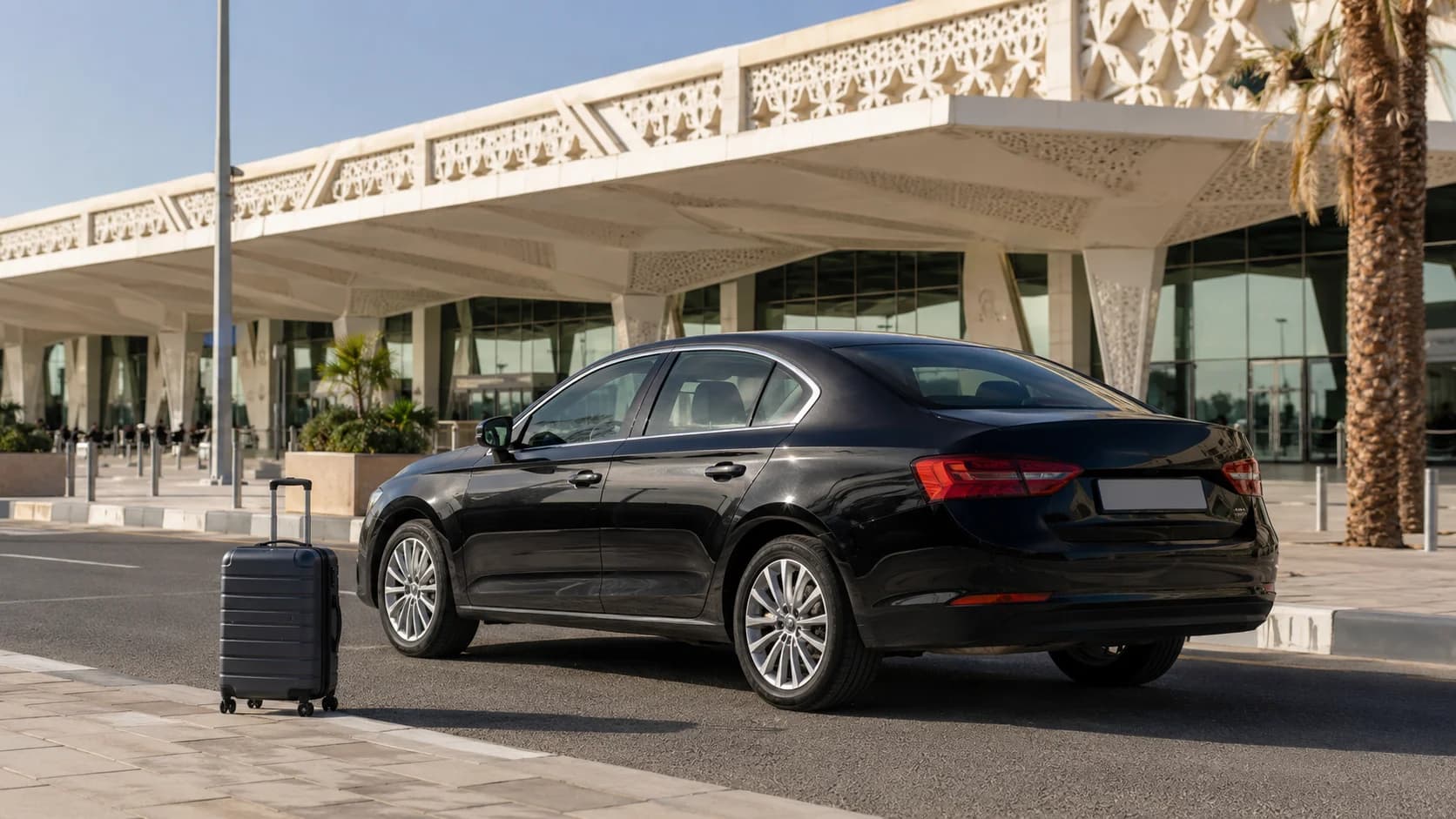
This is exactly the type of route where a direct sedan transfer from Fes can become much more practical, especially for one to three passengers with normal luggage.
Fes to Ifrane or Azrou
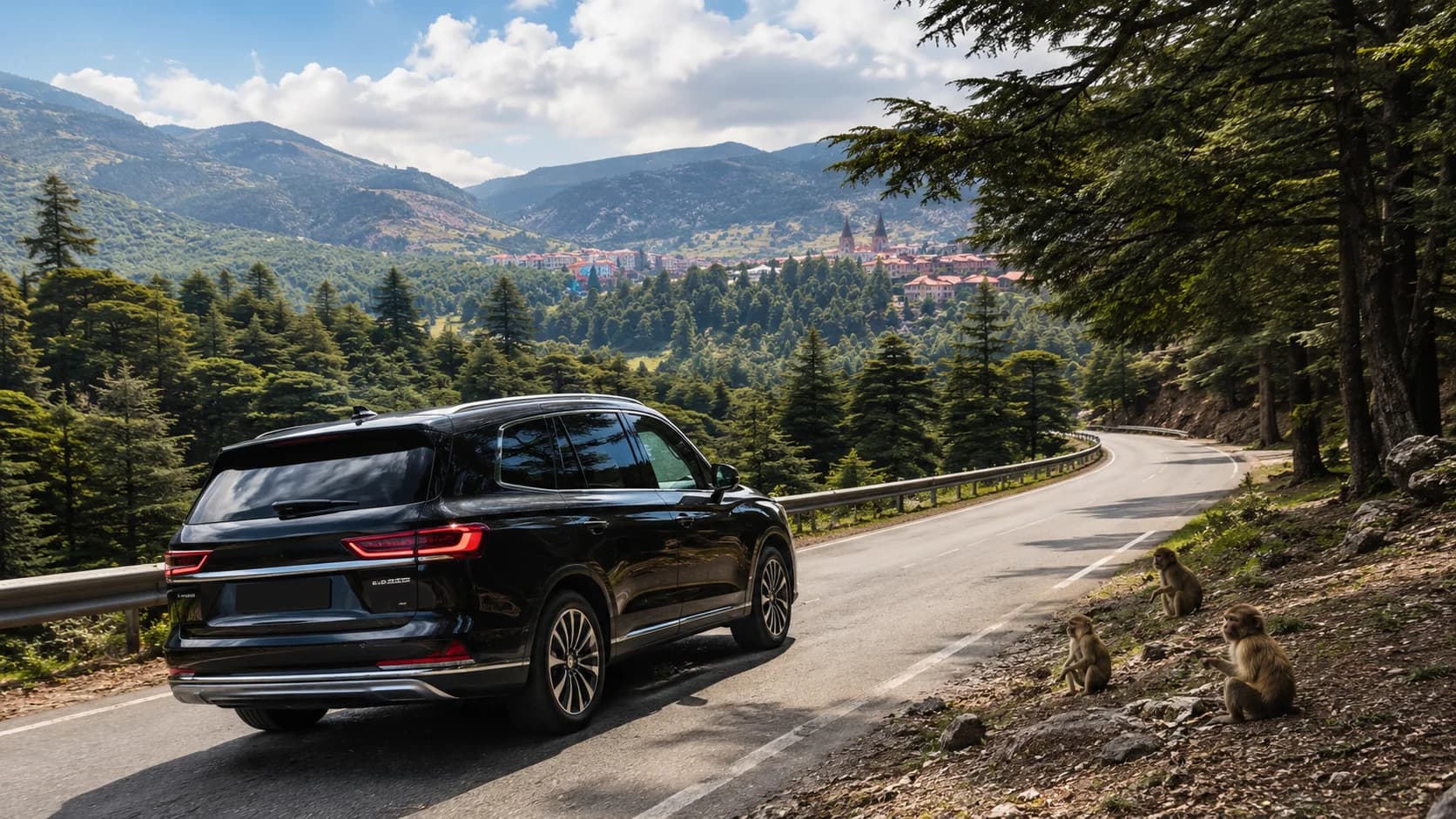
Ifrane and Azrou are road destinations rather than railway destinations.
If these towns are your actual destination, comparing train fares is less useful because another road journey will still be necessary.
Direct transportation from Fes can simplify the trip considerably.
Fes to Merzouga and the Sahara region
Merzouga is another important example.
There is no railway station in Merzouga. The final journey therefore has to be made by road regardless of how the first part of the trip is completed.
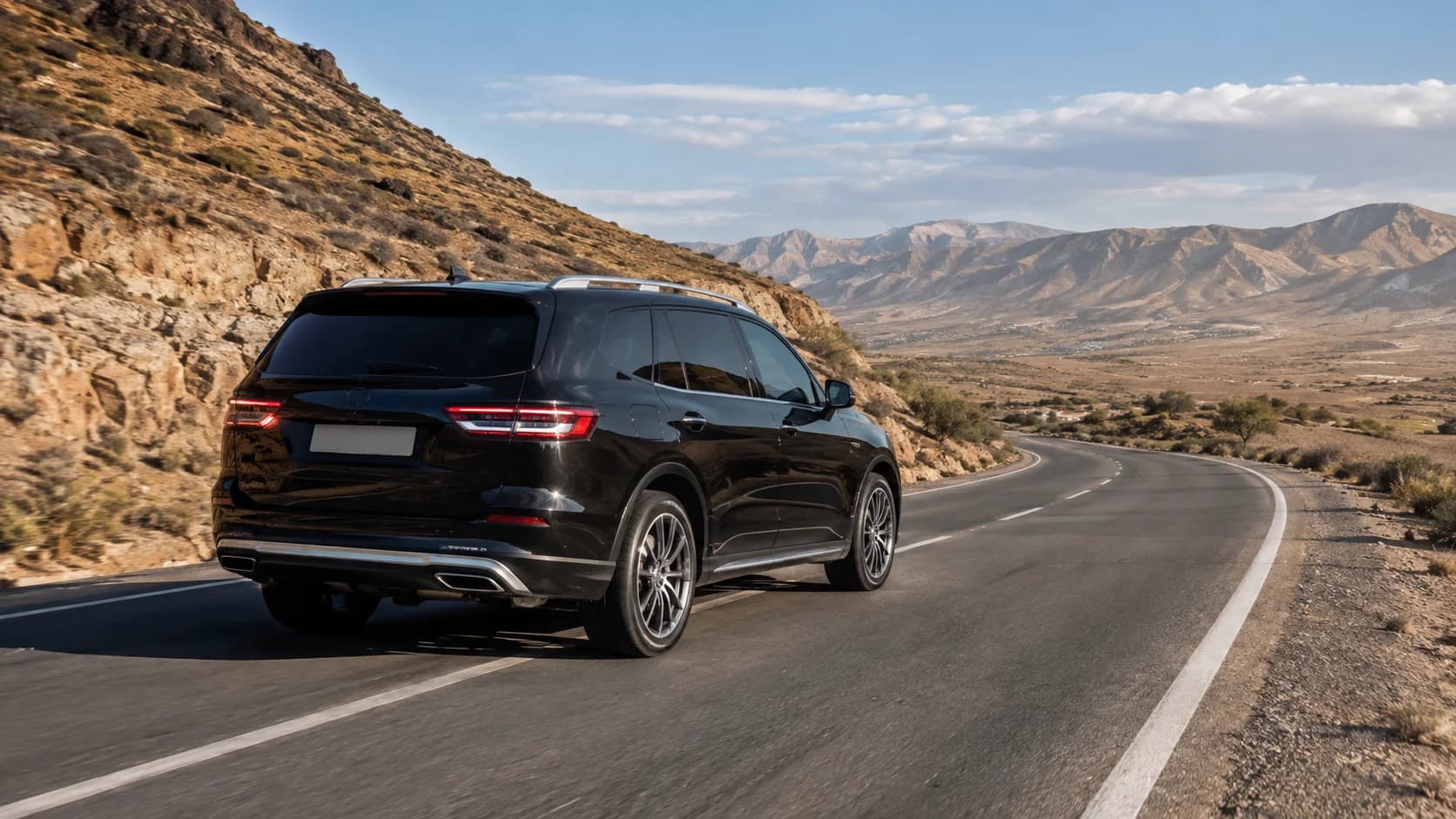
For travelers whose primary goal is reaching a desert hotel or camp area efficiently, direct intercity road transport is often more relevant than rail.
Luggage and Station-Transfer Considerations
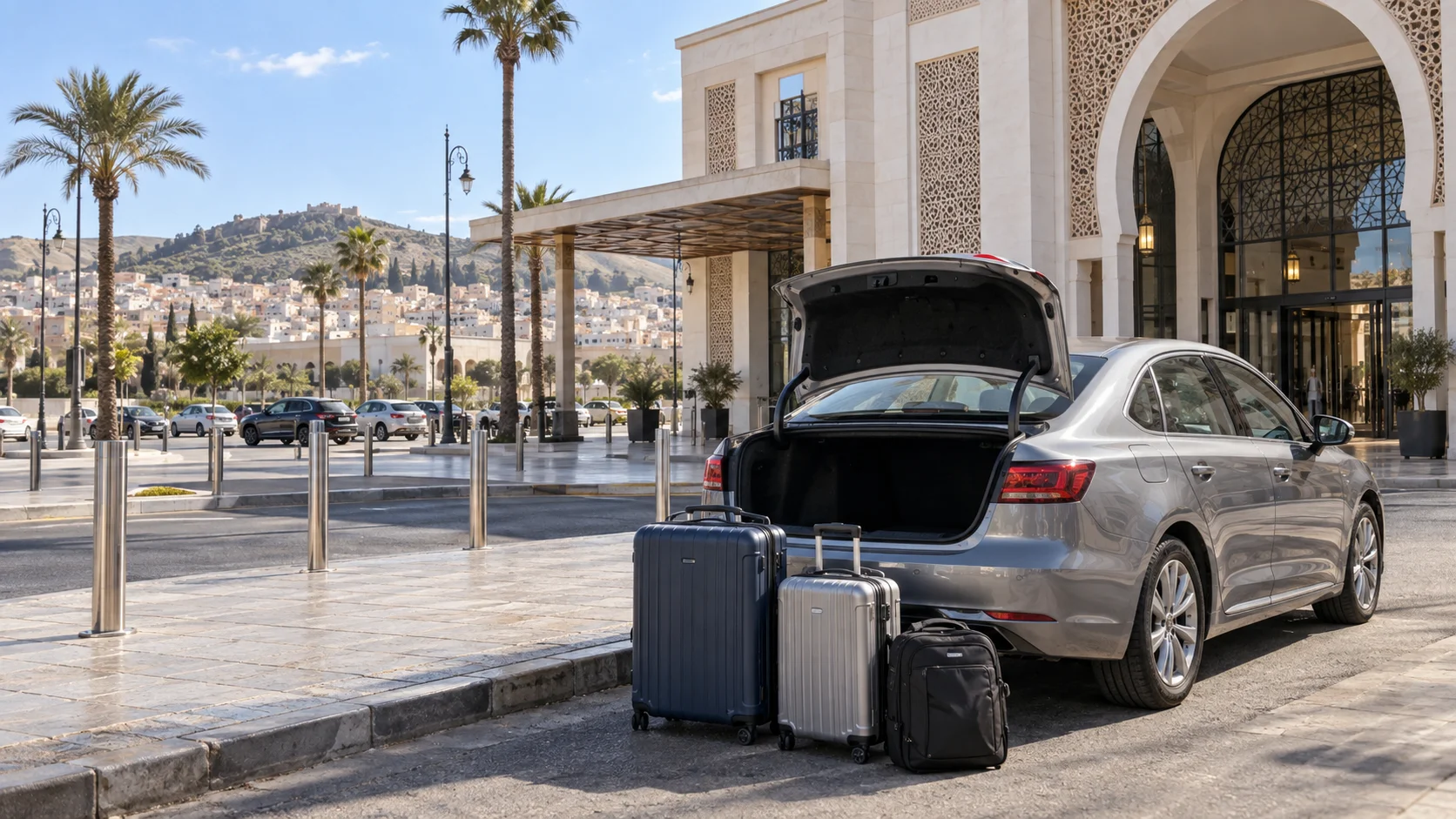
Luggage is one of the most overlooked factors when deciding the best way to travel from Fes.
ONCF permits passengers to bring personal luggage that can be safely carried and stored on board. Its current conditions state that ordinary hand luggage must be manageable enough to place safely in designated spaces, with stated maximum dimensions of 1.2 m × 0.6 m × 0.4 m. Passengers must also avoid blocking aisles or access with luggage that is excessively large or numerous.
For a traveler carrying one suitcase and a backpack, this may present little difficulty.
The experience becomes different when you have:
-
four large suitcases,
-
children's bags,
-
a folded stroller,
-
multiple cabin bags,
-
sports equipment,
-
or several travelers' luggage at once.
The issue is not simply whether luggage is allowed.
It is the complete process of moving it from your accommodation to the station, through the station, onto the train, off the train and into transportation at the destination.
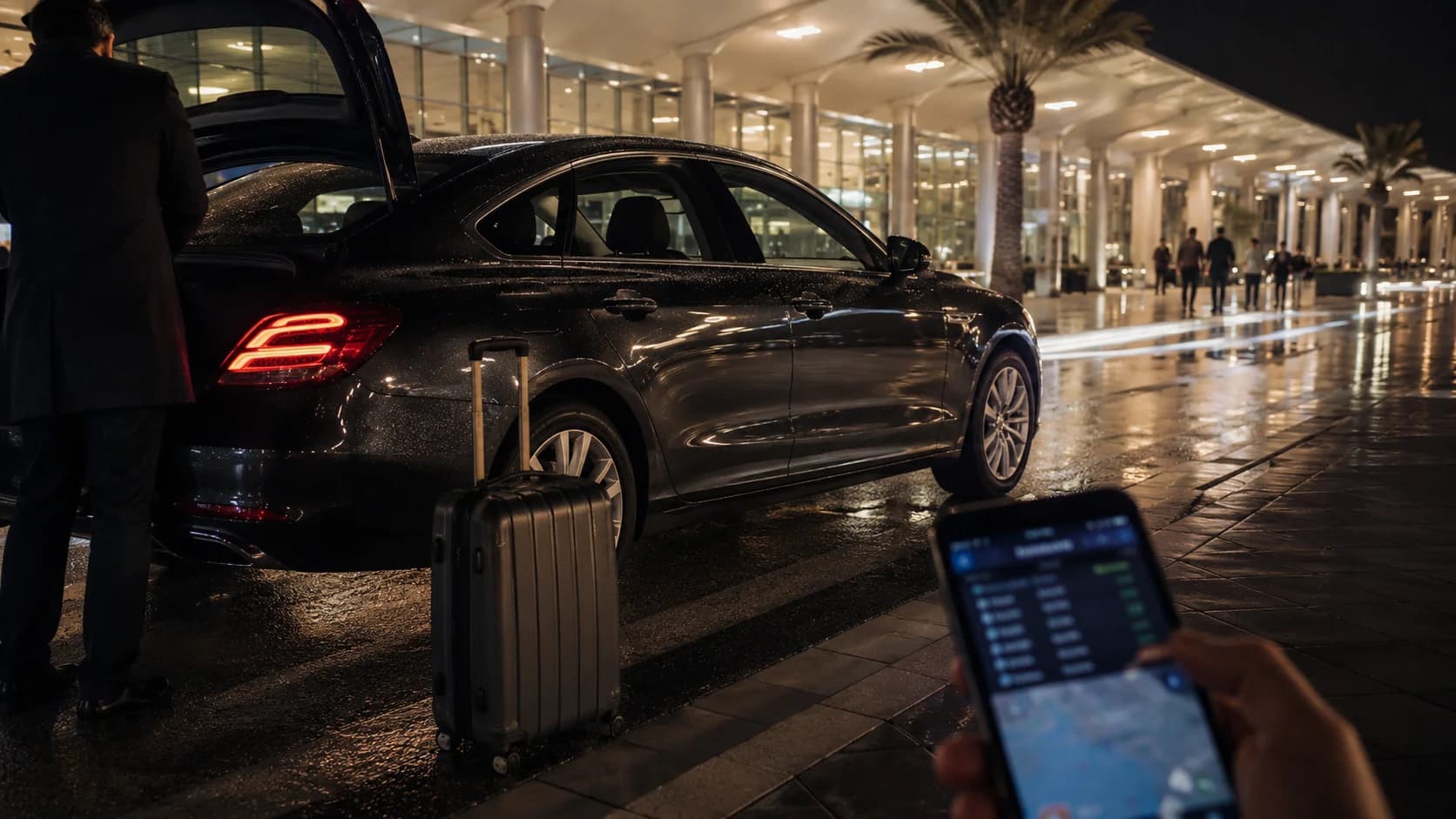
With a private transfer, luggage generally enters the vehicle once at pickup and leaves it at the destination.
When booking a vehicle, however, tell the provider how many passengers and bags you have. Passenger capacity and luggage capacity are not the same thing.
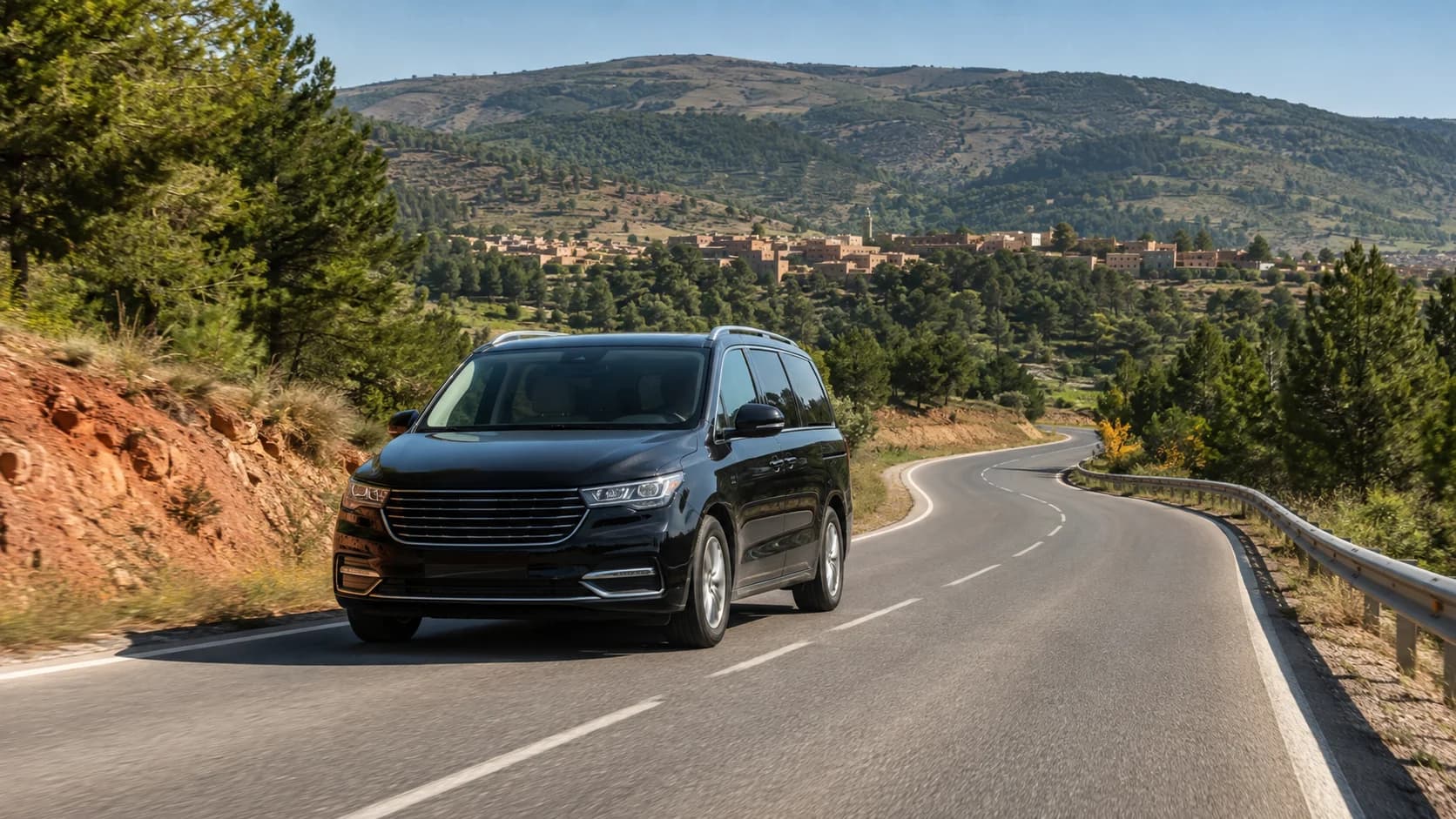
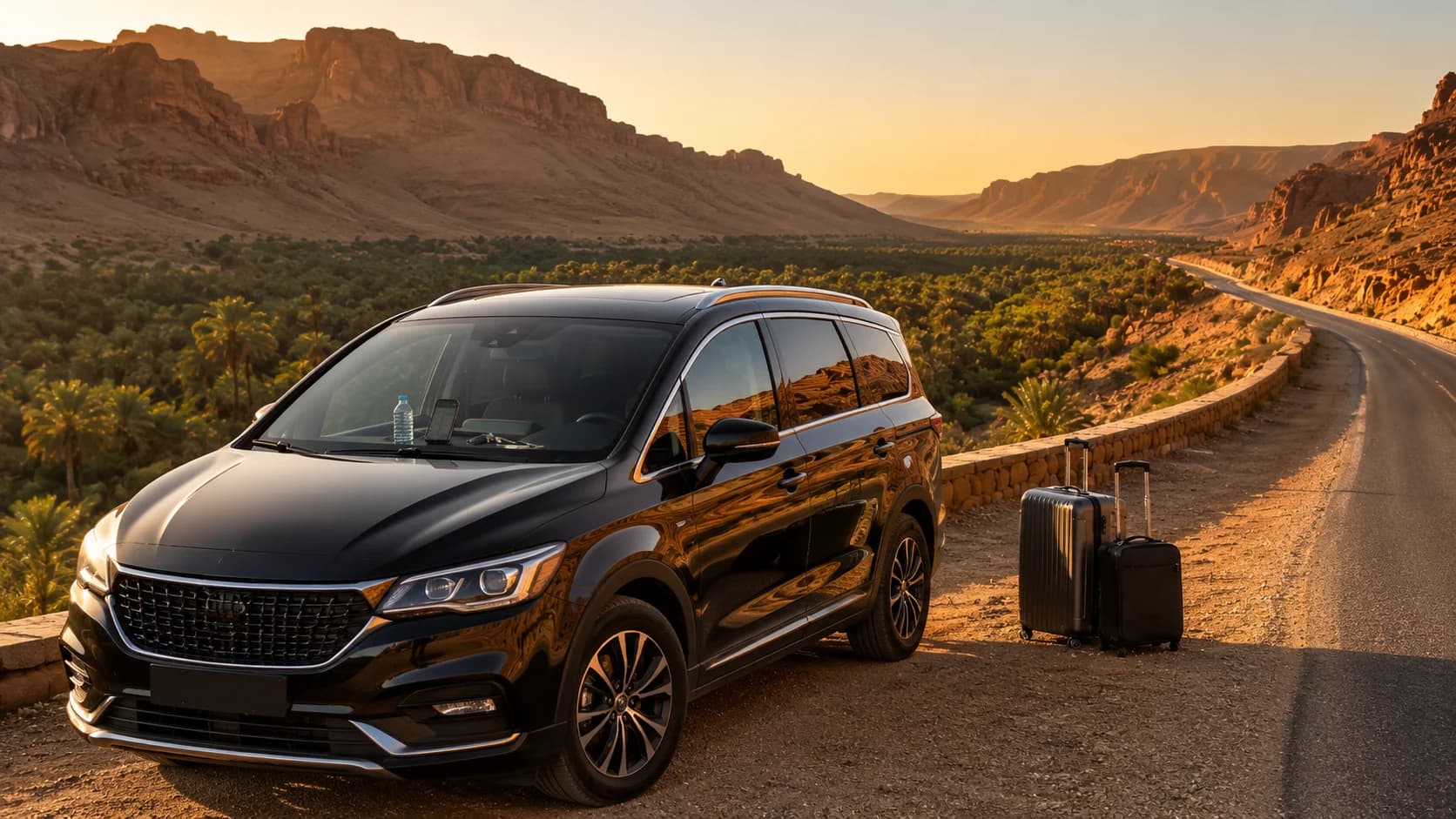
For larger groups or substantial luggage, a minivan transfer in Fes may be more suitable than trying to fit everyone into a sedan.
Families, Groups and Per-Person Logistics
Group size can change the comparison significantly.
For a solo traveler, a train ticket may offer clear value.
For a couple traveling lightly, the same may be true.
Once four, five or six people are making exactly the same journey, however, it becomes important to compare the combined transport cost and logistics for the whole group, not just the price of one train ticket.
Suppose a family needs:
-
transport from its Fes accommodation to the station,
-
several train tickets,
-
management of suitcases and children's belongings,
-
transportation from the arrival station to its hotel.
That trip may still be perfectly reasonable by train.
But it should be compared with one appropriately sized vehicle completing the entire journey.
Families with children
Parents may particularly value:
-
fewer vehicle changes,
-
easier luggage management,
-
direct hotel arrival,
-
scheduled pickup,
-
space for a stroller,
-
and the ability to request an appropriate child seat when available.
These factors do not automatically make private transportation better. They simply increase the value of door-to-door service.
Larger groups
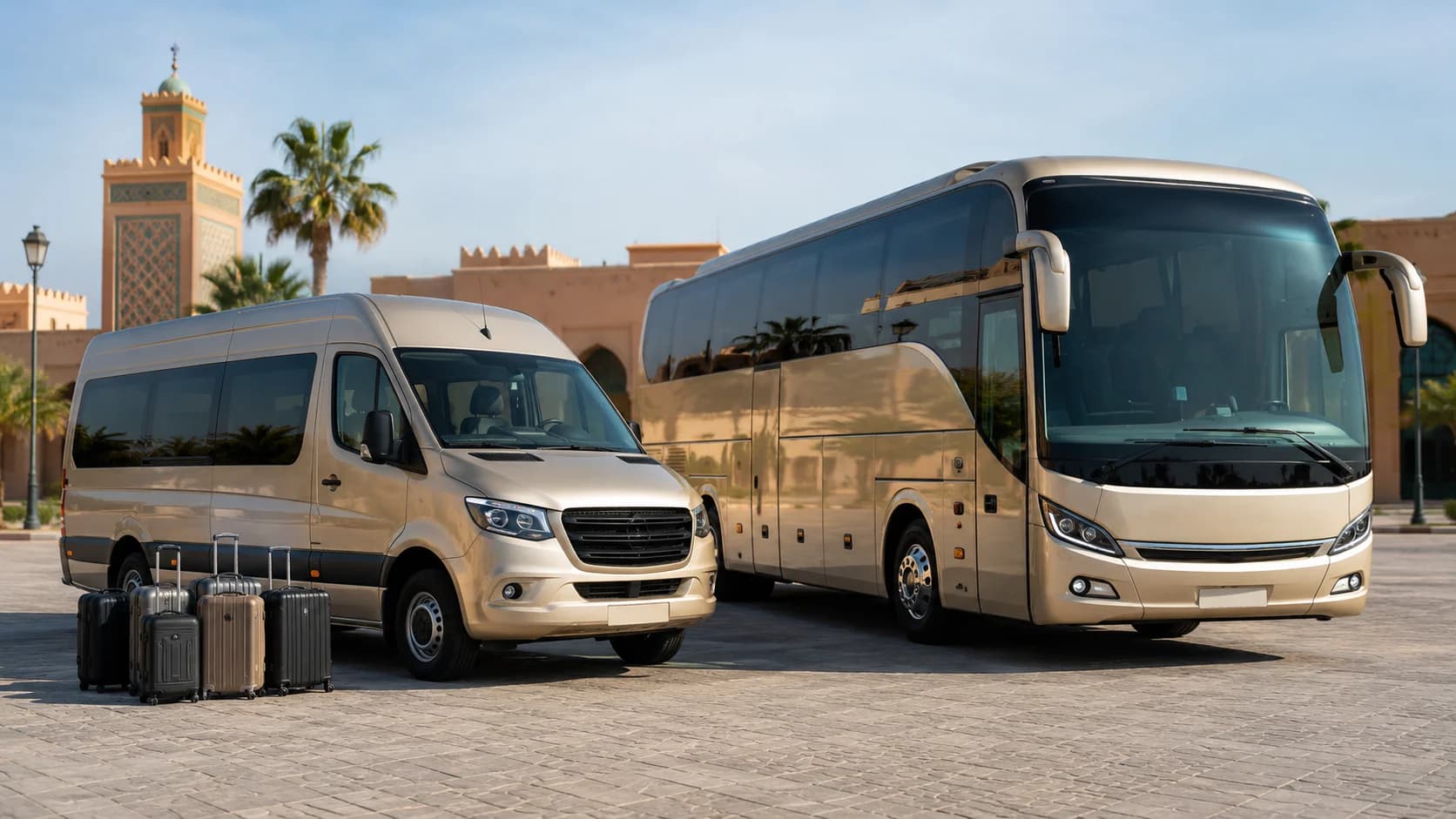
For larger parties, a minivan allows passengers to travel together rather than potentially dividing themselves between several taxis before and after the train journey.
This is where group economics matter.
Do not compare one train ticket against an entire private vehicle. Compare the cost and complexity of moving the whole group from Door A to Door B.
Total Journey Complexity vs Ticket Price Alone
One of the most common mistakes when comparing a taxi vs train from Fes is comparing only the headline cost.
The train calculation is sometimes treated as:
train ticket = total journey cost
But the actual journey may be:
local transport + train + connection + arrival transport
Similarly, comparing only driving time can also be misleading.
A private vehicle does not necessarily beat a train on every route. A train can avoid road traffic and may be a very efficient solution between suitable cities.
Instead, calculate the trip from the moment you leave your accommodation until the moment you reach the next one.
Compare these seven factors
| Factor | Train | Private transfer |
|---|---|---|
| Main transport cost | Often attractive for individuals | Shared across vehicle/group |
| Fixed departure schedule | Yes | Usually arranged around pickup |
| First-mile transport | Often required | Usually included in journey |
| Last-mile transport | Often required | Usually included in journey |
| Luggage handling | Passenger manages luggage | Usually stays in vehicle |
| Non-rail destination | Requires another mode | Direct road travel possible |
| Intermediate stops | Limited | May be possible if agreed in advance |
The key question is therefore not:
“Which ticket is cheaper?”
It is:
“Which complete journey makes more sense for my itinerary?”
Decision Checklist by Traveler Type
Solo traveler
Train is often a strong option if:
-
your destination is rail-connected,
-
your luggage is light,
-
and your accommodation is convenient to the stations.
Couple
Check both options.
Train may be ideal for Fes–Rabat, Fes–Casablanca or another straightforward railway route.
Private transfer becomes more attractive when your hotel is outside the station area or your destination is not rail-connected.
Family with young children
Give extra weight to:
-
child seats,
-
luggage volume,
-
stroller handling,
-
station transfers,
-
and the number of transport changes.
A door-to-door vehicle may reduce the practical complexity substantially.
Group of friends
Compare the total group cost rather than an individual train fare.
A larger vehicle can sometimes offer enough convenience to justify the difference, particularly when everyone has the same destination.
Traveler visiting Chefchaouen, Ifrane or Merzouga
These are road-oriented destinations.
A direct intercity transfer is usually much more relevant to compare than a train-only journey because rail cannot complete the trip to the final destination.
Traveler visiting Rabat or Casablanca
Start by checking the train.
If the schedule, luggage and station locations all work well, rail can be an excellent solution.
Then compare a private transfer only if door-to-door convenience or group logistics materially improve the journey.
Frequently Asked Questions
Is a private transfer better than the train from Fes?
Not universally.
The train is a strong option for many rail-connected destinations, especially for solo travelers and couples carrying manageable luggage. Private transfers become more practical for non-rail destinations, groups, families, large luggage loads and door-to-door journeys.
Which Moroccan cities can be reached conveniently by train from Fes?
Fes is connected to Morocco's national rail system, including routes toward Meknes, Kenitra, Rabat, Casablanca, Marrakech, Oujda and Nador. Tangier can also be reached through the rail network, although the specific itinerary may involve a connection depending on the service. Always check ONCF's current timetable for your travel date.
When is a private driver more practical?
A private driver becomes particularly useful when the destination has no railway station, the passengers have significant luggage, several people are traveling together, children are involved, or you want direct accommodation-to-accommodation transportation.
What if my destination has no direct train?
You will need road transportation for at least part of the journey.
In that situation, compare the complexity of combining train and road transportation with taking a direct private transfer from Fes.
Is train travel easier with large luggage?
It depends on how much luggage you have.
Passengers must be able to carry and safely store their luggage without obstructing the train. Large or numerous bags also have to be managed through the station and during first- and last-mile transportation.
For several travelers with many suitcases, a suitably sized private vehicle can simplify the process.
What is better for a family or group?
There is no automatic winner.
A family or group should compare the combined cost of all train tickets and station transfers against the cost of one appropriately sized private vehicle.
Also consider luggage, child seats, the number of transport changes and final hotel location.
Should I compare total door-to-door time?
Yes.
Door-to-door time is more useful than comparing only scheduled train time with road driving time.
Include:
hotel → station + waiting time + train + connections + arrival station → hotel
Then compare that with the complete private-transfer journey.
Can a private transfer collect me from a medina riad gate?
Many streets inside the historic Fes medina are not accessible to normal vehicles.
If your riad cannot be reached by car, pickup is normally arranged at the nearest practical vehicle-accessible gate, street or meeting point. Confirm the exact pickup location with your provider before departure.
Private Transfer vs Train From Fes: Final Verdict
There is no reason to treat private transfer vs train Fes as a competition with one winner for every traveler.
Morocco's railway network makes train travel a sensible and efficient option for many journeys between major cities. If you are traveling from Fes to Meknes, Rabat, Casablanca or another well-connected destination with limited luggage, check the train first.
Private transportation becomes more compelling when the railway cannot take you close enough to your real destination.
Trips to Chefchaouen, Ifrane, Azrou, Merzouga and other non-rail destinations naturally favor road transport. The same applies when a family or group values luggage space, fewer transfers, flexible departure arrangements or direct accommodation-to-accommodation travel.
The best approach is simple:
Compare the whole journey, not just the transport ticket.
If rail fits your route and travel style, use it.
If door-to-door travel, luggage, group size or a non-rail destination makes the journey complicated, a Fes intercity transfer may be the more practical option.
MarHire Taxi Fes is most useful in exactly those situations: when travelers need direct intercity transportation rather than simply another way to reach a railway station.